"I have two last pieces of advice. First, being pre-approved for a credit card does not mean you have to apply for it. And lastly, the best career advice I can give you is to get your own TV show. It pays well, the hours are good, and you are famous. And eventually some very nice people will give you a doctorate in fine arts for doing jack squat." –Stephen Colbert, delivering the commencement address at Knox College
Did you hear the one about the unemployment rate in Michigan? It shot up in the first month of the year like it was on Cialis. The 2009 unemployment rate of 11.6 percent was 59% higher than the 7.3 percent rate from January 2008.
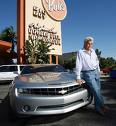
But there is a little hope for us Michiganders and the hope comes from a late-night talk-show host from LA. Jay Leno, the multi-millionaire who at last count owned 84 cars and 73 motorcycles, is coming to the Detroit area in early April. For those hoping Jay is coming for job restoration, think again. NBC is not hiring Michigan TV workers for Leno’s new 10 PM show coming in the fall. Instead, he is coming to the Palace of Auburn Hills in April for not just one but two nights of comedy. Maybe it’s because of guilt that he’s one of the last people in America not hurt by the economic downturn or maybe it’s because he really does love Detroit because he loves cars. But whatever the reason, Jay is offering suffering Detroiters a first: if you don’t have a job, his night of comedy is FREE.
Leno’s “Comedy Stimulus Plan” show is being offered to the unemployed in Michigan at no charge. If you wait in line and tell the box office attendant that you don’t have a job, you can get up to four tickets free. Two Leno shows will allow almost 15,000 a night to laugh instead of crying.
For the last few years, too many Michigan job holders have wept when they lost their jobs, their homes, their self-esteem, and their confidence. Over 500,000 have lost jobs in the last six years, many of them in the beleaguered automotive industry. And while GM and Chrysler fight for survival and bailout money from the government while automotive suppliers hang on financial threads or go bankrupt, thousands more wait to see if they will be next for the unemployment line.
Just think: if Jay can come here to do pro-bono comedy, how about a few other gifts to people without jobs? How about the thousands of American cars sitting on new car lots that could be donated to those desperate without work? How about the banks offering some of their foreclosed properties to the unemployed? Stuff for free could really help those banging their heads day after day, searching the employment ads, begging for a job, just any job.
Over the last year, Michigan payroll jobs fell by 6.2 percent. That included: An 114,000-job loss in manufacturing; a 60,000-job loss in professional and business services; a 49,000-job loss in trade, transportation and utilities; an 18,000-job loss in construction; a 14,000-job loss in leisure and hospitality services; and a 12,000-job loss in the financial activities sector.
Laughing amidst the fear and sadness is good medicine. 55-year-old Brenda Smith of Warren who lost her job with Chrysler 18 months ago, said, “This is just what this area needs” (“Leno: Let’s make it 2 shows,” Korie Wilkins, Detroit Free Press, March 17, 2009). The hope of simply laughing without paying for one night shows how desperate the Detroit area is. We will take whatever we can get.
Workers who still have jobs are afraid because companies are desperate to survive so they cut costs, and that means cutting employees. And if you don’t have a job, what company that has slowing sales is going to hire you? It’s a vicious circle that needs to stop, but what is going to stop it? Good jokes and laughter? Well, I guess that doesn’t hurt. If you can’t afford health insurance, at least you can laugh out loud (LOL) about doctors. Jay Leno once said, “The New England Journal of Medicine reports that 9 out of 10 doctors agree that 1 out of 10 doctors is an idiot.”
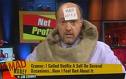
There are a lot of idiots other than doctors who have helped put the economy into the toilet. You could get mad about the 40 AIG employees who are due to collect $165 million in bonuses after nearly bankrupting the company and forcing AIG to receive $170 billion so far in government aid. Or you can get mad like Jon Stewart at Jim Cramer and CNBC for not warning viewers enough about banks and the stock market in 2007.
Or you can find glimmers of hope amidst the fear. Spring is around the corner, MLB’s Opening Day will be here in a few weeks, and this week begins the NCAA basketball tournament which will end in Detroit at Ford Field on April 6th. So forget about lost jobs and dream that your favorite college basketball team might win the big one and be crowned champion in Detroit.
I prefer to laugh with Jay Leno and John Stewart instead of getting mad or getting lost in sports. Maybe you’ll laugh at this quote from Jon Stewart: “You just have to keep trying to do good work, and hope that it leads to more good work. I want to look back on my career and be proud of the work, and be proud that I tried everything. Yes, I want to look back and know that I was terrible at a variety of things.”
Let’s all start laughing again, pushing ourselves to believe that each day will be less terrible than the day before and that good work and good days will be here soon.
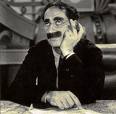
Politics is the art of looking for trouble, finding it everywhere, diagnosing it incorrectly and applying the wrong remedies. (Groucho Marx)
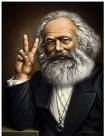
“The history of all hitherto existing society is the history of class struggles.” (Karl Marx, The Communist Manifesto
No, they haven’t come back to life. But the words of Groucho and Karl are starting to ring a little truer every day. Karl wasn’t one of the Hollywood Marx Brothers but he certainly was more philosophical than Harpo, Chico, or Zeppo. If he and Groucho could see us from beyond, they might be very entertained by our present circumstances.
Karl predicted the demise of capitalism because of its “class struggles” in which the lower classes become jealous of the upper class and the battles between them. Obama may not be a Marxist but he has declared a war or at least a mild attack on the upper class, announcing a tax increase and reduced dividends and reduced deductions for charities and housing for the top tier earners. As Groucho said, politicians look for trouble, find it everywhere, diagnose it wrong, and apply the wrong remedies. This was true for Bush and Congress and it’s true for Obama and Congress.
Groucho, the wonderfully satirical cynic, once said, “The secret of life is honesty and fair dealing. If you can fake that, you've got it made.” Boy, how right he was. Look at Bernie Madoff and the mortgage salesmen from the last decade. How about the CEOs of Fannie, Freddie, AIG and the investment houses that helped bring the market down by buying every fraudulent mortgage, packaging it up, selling it to all the financial firms in the world, and then insuring it all with credit default swaps and then reselling the insurance? Honesty and fair dealing were faked and all of the perpetrators had it made.
Until it all broke, just like Karl Marx warned. But why should we throw away capitalism, unless you really believe that Communism is the real answer? Instead, let’s do it right or at least semi-correctly. We need to save our companies and our economy, not by government intervention but by feeling confident again that we are going to come back from the economic grave.
We have lost great voices in the last year who could have helped us cope with all of this madness: Tim Russert, George Carlin, and Paul Harvey. But who was better than Groucho? His most popular comedies were filmed and produced during the Great Depression and helped millions of depressed Americans laugh. “I worked my way up from nothing to a state of extreme poverty,” he once said. If Groucho could laugh about extreme poverty, so can we.
Hey, if we don’t laugh about being poor in this “great recession,” what are we going to laugh about? Death? Well, I guess we could laugh after hearing these immortal words of Groucho, “I intend to live forever, or die trying.”

I wish millions of Americans had read John R. Talbott’s The Coming Crash in the Housing Market: 10 Things You Can Do Now to Protect Your Most Valuable Investment when it was published in April of 2003. And for those who didn’t read that, it would have been nice if a few million Americans would have read his book, Sell Now!: The End of the Housing Bubble in the beginning of 2006. Millions of dollars and thousands of foreclosures might have been stopped if the media had made us aware of these books.
Talbott published Obamanomics in July of 2008 before he was elected, warning what Obama might bring to economic markets here and abroad. Maybe because it is still not acceptable to criticize Obama in much of the media, we hear little about Talbott’s newest book, Contagion: The Financial Epidemic that is Sweeping the Global Economy…And How to Protect Yourself from It.
Here is the description of Contagion in Amazon.com: “Tough times are ahead and Talbott argues that the coming recession will be on a global scale, affecting economies across the world. We have had no real growth in GDP for the last ten years if purchases with government and personal debt are excluded. In effect, government borrowing and spending on the war and healthcare and Social Security and corporate give-aways combined with dramatic increases in personal spending funded by credit card and mortgage debt have funded unsustainable levels of personal and government consumption. The world's banks are threatened with insolvency due to bad mortgage loans and will not be making new loans for any purposes for a very long time. Consumption, by definition, has to decline. Our financial markets worldwide are in chaos with the inability of any financial house or big hedge fund going bankrupt without pulling down the whole $400 trillion derivatives market and the global financial markets at the same time.”
Talbott wrote and finished this book right after the fall of Lehman and the TARP bailout engineered by Paulson, Bush, and Congress. Yet, as I read this book, I was astounded that what were predictions then have already been nearly 100% accurate and it’s only been a few months since publication. As I’ve been reading this book on my Amazon Kindle, I kept wondering if Talbott will get something wrong.
If he doesn’t get something wrong, we are all in deep trouble.
I don’t need to read a book to figure out the economic black hole we’re in. The government borrows and spends trillions within the first six weeks of Obama’s administration. The GDP falls (revised down 6.2% last quarter), job losses widen, Detroit automakers and auto suppliers teeter close to bankruptcy (even with the last government handout) while the government owned banks (Citibank and others,) Fannie and Freddie, and AIG keep asking for more government money before they land in total insolvency. GE, the model of industrial strength and reliability, has its stock near $8 a share and even Warren Buffet’s Berkshire Hathaway, the highest valued stock in the world, has fallen 44% in a year. In his yearly address to shareholders, Buffett admitted that the U.S. economy will certainly be in “shambles” in 2009 and “probably well beyond.” Yet, Buffett, with his characteristic optimism, wrote, “America’s best days lie ahead.”
Don’t bet Talbott on that one. He believes that as the baby boomers begin their retirement years, there is no way that Medicare and Social Security will be solvent. The older citizens will battle the younger ones for limited dollars and jobs will remain scarce. He also believes that the companies that caused havoc to our economy and wouldn’t survive without government help shouldn’t survive. This list includes AIG, GM, and Citigroup. If what they did over many years leads them to bankruptcy, so be it. The strong will come in and buy them out or they will get stronger after bankruptcy.
Bush and Paulsen begrudgingly set the tone of “bailout nation” and Obama’s gang is continuing the bailouts at an accelerated pace, giving more money to AIG, Fannie Mae, Citibank, and Bank of America. They are also proposing helping home owners who can’t pay their mortgages to avoid foreclosures with “cramdown” provisions that banks and mortgage companies must provide.
Who knows if or when the bailouts will ever end? Nothing seems to be giving anyone any confidence and helping the economy heal.
Jim Cramer, certainly no fiscal conservative, has been vehemently opposed to the “radical agenda” of “President Polosi, I mean Obama,” as he jokingly refers. This “White House of Pain” has presided over what Jim called “the greatest wealth destruction I have seen by a US president.” When Obama’s press secretary laughed and commented that Jim Cramer’s television audience was “small,” Jim shot back that “the only thing small about my audience is their 401Ks, pension plans, and annuities.”
Yet, Jim doesn’t yell to get people stuck in despair to do nothing. He wants people to “stay in the game.” It is important to look at your retirement statements regularly, not just stay away. Investor Todd Harrison (“Investors Assume the ‘Ostrich Position,” Minyanville.com, March 4, 2009) wrote about a member of his family who told him last September when buying GE and Apple that “Things will eventually go back up. It always does.” Now, he just stops looking at his account.
Instead of burying your head and hoping for the best, Harrison writes, “be proactive” He compares financial awareness to going on a scale. “Just because you ate donuts—whether they look like Citigroup or smell like General Electric—doesn’t mean you must continue to operate in the same manner. Read the ingredients, look at the expiration date, balance your budget and be psyched—genuinely psyched—that you’re gonna look and feel better than you did yesterday.”
Talbott recommends gold and cash and TIP funds (funds that pay based on the inflation rate.) Others recommend looking at the long term but making sure that we don’t lose interest and stop watching the markets. No matter how pessimistic we are in this contagion of financial chaos, we should not bury our heads. We need to take action every week and weigh ourselves financially so we don’t crumble under the psychological weight. We need to stay strong and be positive that we will survive whatever Obama, Geithner, Bernanke, and the markets throw at us.
What else can we do?
The horrifying secrets held by thousands of elderly Ukrainians had been kept hidden from the world for 60 years. Soviet secrecy and anti-Semitic apathy buried the other side of the Holocaust in the same deep, dark holes in which over one and one half million Jews were killed and shoved into the earth.
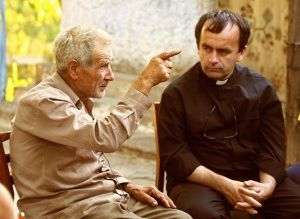
The killing fields have been slowly and meticulously uncovered since 2002, thanks to a French Roman Catholic priest who simply wanted to understand what his grandfather meant when he said that, “for others (in Rava-Ruska, just outside of Poland) it was worse.” When Father Patrick Desbois visited the town in 2002, he asked the mayor where the 18,000 Jews who had been killed in Rava-Ruska had been buried. The mayor said he did not know.
A year later, the new mayor of Rava-Ruska took the priest to a forest where over 100 villagers had gathered, waiting to tell their secret stories and help uncover the graves buried beneath their feet. Thus began the priest’s travels into the heart of the killing fields and his journey to find every mass grave hidden beneath the Ukrainian earth.
Father Desbois, author of Holocaust by Bullets: A Priest’s Journey to Uncover the Truth behind the Murder of 1.5 Million Jews, visited the Jewish Center of West Bloomfield on February 24th to present his findings in front of hundreds of Detroit area Jews. The video and photos and stories that Desbois shared brought gasps from the crowd of hundreds. Many Jews have for years wondered about their Ukrainian Jewish ancestors, trying to imagine how they had lived and died.
The answers are devastating. In the six years that the priest crisscrossed the Ukraine countryside to locate every possible grave (he has uncovered over 800 mass graves so far,) collect artifacts of rusty bullets and shell casings, skulls and bones, and record video testimonies from eyewitnesses, what he discovered was unimaginable. The elderly men and women who were children during the Holocaust pored out their stories to him, almost all of them wondering why they weren’t asked about their experiences before. They admitted that they were silent for six decades because simply no one had ever asked them what they had witnessed.
The priest and his team listened without judgment as hundreds of eyewitnesses told them what they remembered. After reading Soviet and German documents and asking questions to try to understand the details of the mass killings, he listened to stories about Jewish neighbors, acquaintances, friends, and even schoolmates who were killed publicly in front of swarms of onlookers. They were murdered brutally, individually, and often publicly, near their homes, shot into pits or in open fields, sometimes buried alive, and often within sight of the children who were condemned to remember such atrocities. 887 Ukrainian witnesses, who had been forced as children to dig graves, carry Jews, step on Jews, and sell their clothes had been traumatized as children and when asked, wanted to reveal everything before they died.
They had seen thousands of slayings by the Einsatzgruppen, mobile killing squads composed of SS and police personnel. The Nazi killers were advised by law to eliminate the Jewish people, one by one, only one bullet per Jew. The Father often repeated the horrifying refrain: “One Jew, one bullet; one bullet, one Jew.”
I am still haunted by the book and will never forget the overwhelming image that Desbois heard over and over. So many women and children and elderly men were each shot by a bullet in the back of the head, fell or pushed into graves, some without bullets and buried beneath others, then covered with dirt. Here is the memory mentioned often by these witnesses that seers the soul: the oft-repeated image of Jews alive and dead, buried together: how the “earth moved for three days.”
Why did the Father spend nine months each year and why is he still working to research unending tragedies? He is motivated by family history, an intense belief in ethics, his undying faith in God, and his fervor for remembrance. Ever since working with Mother Theresa and after studying Hebrew and Jewish history, he has devoted much of his life to working to improve relations and communications between Christians and Jews and is an advisor to the Vatican on Jewish relations. He told us how the Cain and Abel story had impacted him, especially when the Lord said to Cain, “The voice of thy brother’s blood cries to me from the ground.” Desbois told us that he works tirelessly to uncover each Jewish soul because he hears these words, “Where is your Jewish brother?”
He toils to help us bury our dead, symbolically. On the last day in December 2007 he led a group of Ukrainian Jews who drove to Rava-Ruska from Lviv, an hour away, and gathered in the snow around the grave to recite Kaddish. For Desbois, the ceremony in the woods was a high mark after his years of unbearable work and part of the reason for his efforts. The Jews from Ukraine did not just disappear as the Germans wanted. They were murdered one by one and dumped into the earth. Father Patrick said, “I want to see these people properly buried.” The Nazis had acted quickly with savage violence, hoping to exterminate every Jew, wanting the world to know nothing. Now, because of the incredible dedication of one man, we know. We know.
In a world filled with terror and inhumanity, it is comforting that there are righteous people like Father Patrick Desbois. He has devoted his life to confronting anti-Semitism and furthering Catholic-Jewish understanding, which are “acts of loving kindness.” Father Desbois said he hears these Jewish souls “crying from earth unto heaven.” Because of the efforts of one righteous man, we can now hear again the muffled cries of our brothers and sisters.
We hear them weeping loudly and clearly now.
And We Will Never Forget Them.
I wish millions of Americans had read John R. Talbott’s The Coming Crash in the Housing Market: 10 Things You Can Do Now to Protect Your Most Valuable Investment when it was published in April of 2003. And for those who didn’t read that, it would have been nice if a few million Americans would have read his book, Sell Now!: The End of the Housing Bubble in the beginning of 2006. Millions of dollars and thousands of foreclosures might have been stopped if the media had made us aware of these books.
Talbott published Obamanomics in July of 2008 before he was elected, warning what Obama might bring to economic markets here and abroad. Maybe because it is still not acceptable to criticize Obama in much of the media, we hear little about Talbott’s newest book, Contagion: The Financial Epidemic that is Sweeping the Global Economy…And How to Protect Yourself from It.
Here is the description of Contagion in Amazon.com: “Tough times are ahead and Talbott argues that the coming recession will be on a global scale, affecting economies across the world. We have had no real growth in GDP for the last ten years if purchases with government and personal debt are excluded. In effect, government borrowing and spending on the war and healthcare and Social Security and corporate give-aways combined with dramatic increases in personal spending funded by credit card and mortgage debt have funded unsustainable levels of personal and government consumption. The world’s banks are threatened with insolvency due to bad mortgage loans and will not be making new loans for any purposes for a very long time. Consumption, by definition, has to decline. Our financial markets worldwide are in chaos with the inability of any financial house or big hedge fund going bankrupt without pulling down the whole $400 trillion derivatives market and the global financial markets at the same time.”
Talbott wrote and finished this book right after the fall of Lehman and the TARP bailout engineered by Paulson, Bush, and Congress. Yet, as I read this book, I was astounded that what were predictions then have already been nearly 100% accurate and it’s only been a few months since publication. As I’ve been reading this book on my Amazon Kindle, I kept wondering if Talbott will get something wrong.
If he doesn’t get something wrong, we are all in deep trouble.
I don’t need to read a book to figure out the economic black hole we’re in. The government borrows and spends trillions within the first six weeks of Obama’s administration. The GDP falls (revised down 6.2% last quarter), job losses widen, Detroit automakers and auto suppliers teeter close to bankruptcy (even with the last government handout) while the government owned banks (Citibank and others,) Fannie and Freddie, and AIG keep asking for more government money before they land in total insolvency. GE, the model of industrial strength and reliability, has its stock near $8 a share and even Warren Buffet’s Berkshire Hathaway, the highest valued stock in the world, has fallen 44% in a year. In his yearly address to shareholders, Buffett admitted that the U.S. economy will certainly be in “shambles” in 2009 and “probably well beyond.” Yet, Buffett, with his characteristic optimism, wrote, “America’s best days lie ahead.”
Don’t bet Talbott on that one. He believes that as the baby boomers begin their retirement years, there is no way that Medicare and Social Security will be solvent. The older citizens will battle the younger ones for limited dollars and jobs will remain scarce. He also believes that the companies that caused havoc to our economy and wouldn’t survive without government help shouldn’t survive. This list includes AIG, GM, and Citigroup. If what they did over many years leads them to bankruptcy, so be it. The strong will come in and buy them out or they will get stronger after bankruptcy.
Bush and Paulsen begrudgingly set the tone of “bailout nation” and Obama’s gang is continuing the bailouts at an accelerated pace, giving more money to AIG, Fannie Mae, Citibank, and Bank of America. They are also proposing helping home owners who can’t pay their mortgages to avoid foreclosures with “cramdown” provisions that banks and mortgage companies must provide.
Who knows if or when the bailouts will ever end? Nothing seems to be giving anyone any confidence and helping the economy heal.
Jim Cramer, certainly no fiscal conservative, has been vehemently opposed to the “radical agenda” of “President Polosi, I mean Obama,” as he jokingly refers. This “White House of Pain” has presided over what Jim called “the greatest wealth destruction I have seen by a US president.” When Obama’s press secretary laughed and commented that Jim Cramer’s television audience was “small,” Jim shot back that “the only thing small about my audience is their 401Ks, pension plans, and annuities.”
Yet, Jim doesn’t yell to get people stuck in despair to do nothing. He wants people to “stay in the game.” It is important to look at your retirement statements regularly, not just stay away. Investor Todd Harrison (“Investors Assume the ‘Ostrich Position,” Minyanville.com, March 4, 2009) wrote about a member of his family who told him last September when buying GE and Apple that “Things will eventually go back up. It always does.” Now, he just stops looking at his account.
Instead of burying your head and hoping for the best, Harrison writes, “be proactive” He compares financial awareness to going on a scale. “Just because you ate donuts—whether they look like Citigroup or smell like General Electric—doesn’t mean you must continue to operate in the same manner. Read the ingredients, look at the expiration date, balance your budget and be psyched—genuinely psyched—that you’re gonna look and feel better than you did yesterday.”
Talbott recommends gold and cash and TIP funds (funds that pay based on the inflation rate.) Others recommend looking at the long term but making sure that we don’t lose interest and stop watching the markets. No matter how pessimistic we are in this contagion of financial chaos, we should not bury our heads. We need to take action every week and weigh ourselves financially so we don’t crumble under the psychological weight. We need to stay strong and be positive that we will survive whatever Obama, Geithner, Bernanke, and the markets throw at us.
What else can we do?

 Confessions from the Killing Fields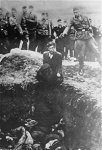
The horrifying secrets held by thousands of elderly Ukrainians had been kept hidden from the world for 60 years. Soviet secrecy and anti-Semitic apathy buried the other side of the Holocaust in the same deep, dark holes in which over one and one half million Jews were killed and shoved into the earth.
The killing fields have been slowly and meticulously uncovered since 2002, thanks to a French Roman Catholic priest who simply wanted to understand what his grandfather meant when he said that, “for others (in Rava-Ruska, just outside of Poland) it was worse.” When Father Patrick Desbois visited the town in 2002, he asked the mayor where the 18,000 Jews who had been killed in Rava-Ruska had been buried. The mayor said he did not know.
A year later, the new mayor of Rava-Ruska took the priest to a forest where over 100 villagers had gathered, waiting to tell their secret stories and help uncover the graves buried beneath their feet. Thus began the priest’s travels into the heart of the killing fields and his journey to find every mass grave hidden beneath the Ukrainian earth.
Father Desbois, author of Holocaust by Bullets: A Priest’s Journey to Uncover the Truth behind the Murder of 1.5 Million Jews, visited the Jewish Center of West Bloomfield on February 24th to present his findings in front of hundreds of Detroit area Jews. The video and photos and stories that Desbois shared brought gasps from the crowd of hundreds. Many Jews have for years wondered about their Ukrainian Jewish ancestors, trying to imagine how they had lived and died.
The answers are devastating. In the six years that the priest crisscrossed the Ukraine countryside to locate every possible grave (he has uncovered over 800 mass graves so far,) collect artifacts of rusty bullets and shell casings, skulls and bones, and record video testimonies from eyewitnesses, what he discovered was unimaginable. The elderly men and women who were children during the Holocaust pored out their stories to him, almost all of them wondering why they weren’t asked about their experiences before. They admitted that they were silent for six decades because simply no one had ever asked them what they had witnessed.
The priest and his team listened without judgment as hundreds of eyewitnesses told them what they remembered. After reading Soviet and German documents and asking questions to try to understand the details of the mass killings, he listened to stories about Jewish neighbors, acquaintances, friends, and even schoolmates who were killed publicly in front of swarms of onlookers. They were murdered brutally, individually, and often publicly, near their homes, shot into pits or in open fields, sometimes buried alive, and often within sight of the children who were condemned to remember such atrocities. 887 Ukrainian witnesses, who had been forced as children to dig graves, carry Jews, step on Jews, and sell their clothes had been traumatized as children and when asked, wanted to reveal everything before they died.
They had seen thousands of slayings by the Einsatzgruppen, mobile killing squads composed of SS and police personnel. The Nazi killers were advised by law to eliminate the Jewish people, one by one, only one bullet per Jew. The Father often repeated the horrifying refrain: “One Jew, one bullet; one bullet, one Jew.”
I am still haunted by the book and will never forget the overwhelming image that Desbois heard over and over. So many women and children and elderly men were each shot by a bullet in the back of the head, fell or pushed into graves, some without bullets and buried beneath others, then covered with dirt. Here is the memory mentioned often by these witnesses that seers the soul: the oft-repeated image of Jews alive and dead, buried together: how the “earth moved for three days.”
Why did the Father spend nine months each year and why is he still working to research unending tragedies? He is motivated by family history, an intense belief in ethics, his undying faith in God, and his fervor for remembrance. Ever since working with Mother Theresa and after studying Hebrew and Jewish history, he has devoted much of his life to working to improve relations and communications between Christians and Jews and is an advisor to the Vatican on Jewish relations. He told us how the Cain and Abel story had impacted him, especially when the Lord said to Cain, “The voice of thy brother’s blood cries to me from the ground.” Desbois told us that he works tirelessly to uncover each Jewish soul because he hears these words, “Where is your Jewish brother?”
He toils to help us bury our dead, symbolically. On the last day in December 2007 he led a group of Ukrainian Jews who drove to Rava-Ruska from Lviv, an hour away, and gathered in the snow around the grave to recite Kaddish. For Desbois, the ceremony in the woods was a high mark after his years of unbearable work and part of the reason for his efforts. The Jews from Ukraine did not just disappear as the Germans wanted. They were murdered one by one and dumped into the earth. Father Patrick said, “I want to see these people properly buried.” The Nazis had acted quickly with savage violence, hoping to exterminate every Jew, wanting the world to know nothing. Now, because of the incredible dedication of one man, we know. We know.
In a world filled with terror and inhumanity, it is comforting that there are righteous people like Father Patrick Desbois. He has devoted his life to confronting anti-Semitism and furthering Catholic-Jewish understanding, which are “acts of loving kindness.” Father Desbois said he hears these Jewish souls “crying from earth unto heaven.” Because of the efforts of one righteous man, we can now hear again the muffled cries of our brothers and sisters.
We hear them weeping loudly and clearly now.
And We Will Never Forget Them.

“I’m a very good driver,” Ray repeated in a nasal autistic accent. When I last saw the movie, Rain Man, I relished hearing Dustin Hoffman recite the line, “I’m a very good driver,” and when he got his chance, he jerked and swerved but didn’t get into a bad accident with the help of his brother.
My mind swerved to the Driver’s Ed days at Clarenceville High when I’d sit in Mr. Weddle’s room every Saturday morning during the fall of my junior year. This was football season and Mr. Weddle was the coach of our Trojans, one of the teams sitting near the bottom of the Class D league. I was in the Marching Band and had to watch the bloodbaths every Friday night and play my cornet covered in a heavy, foolish-looking Trojan uniform before, at halftime, and after the games. I rarely paid much attention to the game except to watch the opposing team’s score rising during the night to a typical 49-10 or 52-7.
I felt sorry for Mr. Weddle as he trudged into class, looking tired and angry. He’d put his hat on the desk and then ask us in his typical pissed-off voice, “Okay, conviction for which of the following carries the highest number of points? A. reckless driving, B. hit and run with property damage, C. driving without a license, D. passing a stopped school bus unloading children.
I didn’t know the answer and I didn’t look forward to going out to drive with the high school coach and two other kids on his errands, to his house, dry cleaners, or the gas station. But that’s just what I did, as he would lie back in his seat and doze off. “Goldman, the dry cleaner is on Middlebelt and 6 Mile Road. Do you know how to get there?” I think so, I would say meekly as I tried to figure out the difference between a right and left turn and where my darn blinkers were. Sometimes, he would wake and slam on the brake violently, sensing we were inches from a head-on.
When he had me parallel park between two cars, I cut the wheel as hard as I could and pulled up slowly, carefully, until I felt a slight bang in the front end. “Goldman, do you know what you did?” No, coach, what did I do? “You hit my car, that’s what you did; do you enjoy smashing cars?” The laughter was loud and continual in the back of the car as I quickly apologized.
Even today, my kids and wife think I don’t know how to parallel park. My daughter, Ilana, says that I’m a terrible parker. I counter, “I’m a very good parker,” as close to Dustin as possible.
I wasn’t much better in the first year after I got my license. My dad hated taking me driving and yelled at me when I slid off the road or made a wide turn. In the first winter, I drove down Rensellor and slid in the snow, scraping the right side of another car perfectly parallel to mine. My ’68 Ford Custom didn’t have front-wheel drive, air bags, or special brakes. It was made to crash into other cars.
I remember only the scariest moments: spinning in a complete circle three times at Grand River and Telegraph on an icy morning and not crashing into anything; standing on Coolidge and Maple in the middle of a snowstorm after a double feature movie while the car slowly slid right toward the ditch as I turned the wheel as fast as I could.
Out of state incidents were no better: the midnight drive through the Smoky Mountains in Tennessee with two friends, the “Fog Ahead” sign barely visible, the curves along the mountainside imperceptible in the pitch-black. Rob slept in the back as Scott and I grimaced that this was going to be our last night alive. I latched onto the tail lights of a semi and kept within ten feet as long as I could, hoping the truck wouldn’t lurch over the edge.
Or the scenic tour from LA to Palm Springs in the middle of day, in the high elevation and continual winding roads that seemed to never stop. For almost four straight hours, I looked straight, away from the beauty of the cliffs below and held on to the steering wheel for dear life, hoping the curves along the mountains would soon stop. Judy held our first child, Kyle, in her belly as I felt the unbearable responsibility, holding the power of my entire family’s lives in my sweat-filled hands.
My auto memories are not always drenched with dread. When I went from a Wayne State University class into the parking structure on Second Street and couldn’t find my car, I worried a little, but when the parking attendant said that he saw the Yellow Custom driven away a few minutes earlier, I was puzzled: who would steal that rusted, dilapidated junk-yard piece of crap?
Lonnie Baker, that’s who, Lonnie-escaped-from-prison Baker, whom the police found a few days later when they pulled the car over and Lonnie, with the biggest afro in the history of the seventies, pulled out the driver’s license in the glove compartment and showed the officer his mother’s name, Rochelle Goldman. The police didn’t quite believe that Lonnie was Jewish.
I had said my goodbyes to the Ford until the police called my parents’ house, telling me to come to court and testify. They said they picked up the thief and needed my corroboration.
I was terrified and sweaty in court, as if Raymond Burr himself was going to grill me on the stand. When I put my hand on the bible, I was hoping it was the one-and-only Torah given to Moses. I panted and prayed and felt my heart pounding in my throat as Lonnie walked by. His afro almost touched the hanging light, his eyes pierced mine as if to say the stolen car was the least of my problems.
When his attorney asked how valuable my car was and if I spent a lot on maintenance, I said that I just had gotten an oil change and new filter. He called me a smart-mouth and made me recall when I last changed the tires. When I said I couldn’t remember, I felt like a fraud taking a lie detector test. I was that scared.
I wasn’t that scared when my best friend, Rob, had his first car stolen at Wayne. It was becoming almost routine and he called the insurance agent when he realized it had disappeared.
His second stolen car was a bigger problem, at least for me. When a few friends and I came out of the Telex Theatre on Telegraph and Ten Mile, we knew something was wrong. There was nothing in our parking spot. I looked at the spot, turned left, looked right, and bent my knees to see if I was missing something.
I was. I was missing my Journal from my English class. This was no ordinary assignment; it was the journal we had kept since the beginning of class many weeks earlier, the homework that was going to comprise 75% of the course grade. I couldn’t believe my luck. A stolen car was not so bad, but how was I going to get all my words back from the last 8 weeks? There were no computers, no saved documents. This was all I had written, all I had prepared for the class.
The teacher said the “Missing Journal” stolen with a car was a first in the annals of reasons for homework not turned in. He had heard of feet stuck in toilets, dead grandmas, and dogs that ripped papers apart, but a stolen car with the entire semester assignment inside was a new one.
The missing journal was never found. I started a new one that was incomplete but my teacher was thoughtful and gave me a B anyways.
I sometimes wonder if the thief who stole Rob’s car ever sat and started reading my journal. I don’t remember what I wrote but it was personal and meaningful, at least to me. Did he laugh or cry or say, damn, I’m really glad I stole this car? Or did he say, what a piece of luck? I could have found an expensive radio or jewelry but instead I got stuck with the “Life and Times of Arnie Goldman.”
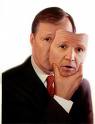

 Time Magazine has run the Man of the Year for over half a century which has now evolved into Person of the Year. Not surprisingly, the 2008 Person of the Year was Barack Obama with runners-up Henry Paulsen, Nicholas Sarkozy, Sarah Palin, and Zhang Yimou, creator of the 2008 Olympics in China. Barack follows 2007’s Vladimir Putin and 2006’s YOU. Yes, You were the 2006 Person of the Year. Maybe you didn’t feel like you deserved the honor but Time thought you did. So accept it and move on to 2008.
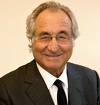
It must be exciting and inspiring to choose among those who had the most influence in 2008. But I would argue it’s a lot more fun and infuriating to choose from the dozens of worthy candidates for Shmuck of the Year 2008. Almost every week we got a few more extraordinary candidates. In November, would anyone have thought that Bernard Madoff or Governor Rod R. Blagojevich would be finalists in this prestigious competition?
A few weeks ago, few of us even knew who these schmucks were. Now, you have to be a real schlemiel or dead not to know that Madoff and Blagojevich are two of the most corrupt hoodlums in America.
They have lots of company. Think of all of the worthy candidates who can make cases for Schmuck of the Year.
Exhibit 1: You might consider the Senators that voted against giving the Detroit automakers a $14 billion lifeline to survive a few months heroes if you hate unions, love foreign automakers, and believe that we’ve had enough of government bailouts. But I tend to be more on the side that these sanctimonious bobbleheads placed themselves in the running for Schmuck of the Year with their actions.
I’m prejudiced because I come from Detroit and I have watched the entire Great Lakes area being strangleheld by fear and lack of credit for people to buy houses or cars, American or foreign. Imagine the ire when you read Detroit Free Press columnist, Mitch Albom, in his excellent essay, “Hey, you senators: Thanks for nothing.” (Detroit Free Press, Dec. 14, 2008) “Do you want to see the last gurgle of economic air spit from our lips? If so, senators, know this: You’ll go down with us….History will show that when America was on its knees, a handful of lawmakers tried to cut off its feet. And blame the workers….In a world where banks hemorrhaged trillions in a high-priced gamble called credit derivative swaps that YOU failed to regulate, how on earth do WE need to be punished? In a bailout era where you shoveled billions, with no demands, to banks and financial firms, why do WE need to be schooled on how to run a business?
“Who is more dysfunctional in business than YOU? Who blows more money? Who wastes more trillions on favors, payback and pork?”
Who can argue with Mitch’s impassioned plea for sanity? We heard about AIG getting $150 billion of government money and continuing to give thousands of employees millions of dollars of bonuses. “There ought to be a law—against the hypocrisy our government has demonstrated. The speed with which wheelbarrows of money were dumped on Wall Street versus the slow noose hung on the auto companies’ necks is reprehensible. Some of those same banks we bailed out are now saying they won’t extend credit to auto dealers. Wasn’t that why we gave them the money? To loosen credit?
“Where’s your tight grip on those funds, senators? Where’s your micromanaging of the wages in banking? Or do you just enjoy having your hands around blue-collared throats?”
You can imagine Heath Ledger’s Joker laughing to Mitch and saying with glee, “Why So Serious?” If Heath weren’t dead and the Joker wasn’t an imaginary super-villain, he might have argued that Senators Shelby of Alabama and Corker of Tennessee were only doing the all-American thing of protecting their Japanese, German, and Korean transplants that collected billions of dollars of their states’ tax breaks. Mitch fired back to the senators, “You’re so fond of the foreign model, why don’t you do what Japanese ministers do when they screw up the country’s finances? They cut their salaries. Or they resign in shame.”
So who bailed out the senators who wouldn’t bail out the automakers? Vice President Dick Cheney, a previous recipient for Schmuck of the Year (you pick the year), admitted that lawmakers “had ample opportunity to deal with this issue and they failed. The president had no choice but to step in.” Yes, the president “caved in” according to free-market conservatives, many of whom believed that the $750 financial bailout was responsible and necessary. I believe that George W. Bush, the lame duck president, was right up to the end of 2008, one of the top candidates for Schmuck of the Year but his last-minute aid to the Detroit automakers let him slip away quietly into the ex-president afterlife without any more shame than he already has to carry.
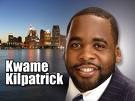
Mitch and I don’t have to rely on the administration or Congress to supply us schmucks. Detroit has one of the best in its ex-mayor Kwame Kilpatrick, who is resting for a few months in a Detroit penitentiary and is barred from public office for five years. Kwame seems so last year. All he did was have an affair with his chief of staff, cheat on his wife, his city, lie about it, cost the city $9 million so that no one would know of his lying and cheating, fought tooth and nail to stay on as mayor, and finally plead guilty to two felony counts of obstructing justice and one count of felonious assault, agreeing to serve four months in jay, pay up to $1 million in restitution, serve five years of probation, and agree not to run for office for five years.
Kwame must be an inspiration to Illinois Governor Blagojevich. Like Kwame, Rod looks to be following Kwame’s lead to try to hang onto his job for months as the media and attorneys form a posse outside his office. Unlike New York Governor Spitzer who might have been a serious challenger for Schmuck of the Year but who honorably resigned after being caught with a high-end prostitute after making his name for his years of fighting organized crime, financial crime, and prostitution, the Illinois governor will not go quietly into the good night. Blago used the Governor’s office like a public prostitute, trying to sell everything he could to the highest bidder. It wouldn’t have been surprising to see Donald Trump as the next Illinois senator, if RB had his way. What made Blagojevich so intriguing was the colorful jargon he used to disparage everyone, including the next president.
Tony Soprano seems like such a polite gentleman in comparison to Blagoman. But as a corrupt crook, he is small potatoes compared to Bernie Madoff. The former Nasdaq chairman and SEC advisor was respected as a well-connected, a “nice” Jewish man, and brilliant investor who made his hundreds of wealthy clients consistently excellent returns between 10 and 13% a year, in bull or bear markets. He was the most consistent investing maven on Wall Street and it turns out, a complete fraud. He swindled charities and celebrities, Christians and Jews. He stole everything from charities run by Spielberg, Wiesel, Jewish Federations, universities, pension funds. Organizations and people who thought they still had retirement accounts found out they had been swindled out of everything. And it looks like Bernard also swindled the United States government out of over $17 billion in taxes, enough to give GM, Ford, and Chrysler their urgent bridge loans.
So when you look in the dictionaries in the years to come, the word, “Schmuck,” may have Madoff’s photo within the frame.
How could Bernie Madoff have gotten away with this “Ponzi scheme” for so long? It turns out that Harry Markopolos was on the trail since 1999, when he began to investigate Madoff’s operation and noticed even then the fraud that was going on. He worked with mathematicians and complained to the SEC’s Boston office in 1999 and submitted a report in 2005 that it was “highly likely” that “Madoff Securities is the world’s largest Ponzi scheme.” In the report, he said he was also worried about the “the personal safety of myself and my family.” But like so many other warnings unheeded by the useless SEC and the federal government, nothing was done.
How many billions of dollars has Christopher Cox, the appointee of George W. Bush, cost investors in the seven years he has “led” this regulatory agency? Not surprisingly, the regulators didn’t regulate. And trillions of dollars have been lost.
The Schmuck list is long and wide and certainly could be led by SEC chairman, Christopher Cox. As Jim Cramer said, Cox is an “idealogical fool,” enough to be a regular on Jim’s Wall of Shame and get the Plaxico award from him as well. Cox was in charge of policing the men who traded stocks and bonds, who jacked up oil futures to $147 a barrel and then brought them back down to under $40 a barrel. His loyalty to the Bush free-market credo led to so many billions being lost by investors. Who can name all the interesting trading vehicles that were allowed and that led to the ruin of so many? One schmuck was Richard Fuld, CEO of Lehman Brothers, one of the biggest companies to go under. Lehman was also the company that used the most credit derivatives in which its tentacles branched out around the world. In 2001, Lehman Brothers (Europe) published an 86 page document called “Credit Derivatives Explained,” which is the document that explained all of the complex mathematical formulas behind Collateralized Debt Obligations, Arbitrage CDOs, Synthetic CLOs, just to name a few. The many reasons for the financial collapse are revealed within its pages.
Schmucks like Alan Greenspan, Ben Bernanke, Hank Paulsen, and Cox allowed banks and insurance companies to be like financial high-stakes poker players. And Wall Street mavens like Stanley O’Neal replaced by John Thain of Merrill Lynch, Ed Liddy of AIG, Lloyd Blankfein of Goldman Sachs, and Fuld all made over 50 million dollars each and were allowed to keep their winnings. Add Franklin Raines of Fannie Mae, Angelo Mozilo from Countrywide Financial, Jimmy Cayne of Bear Stearns, Dick Syron of Freddie Mac. Add Chuck Prince of Citibank and Bob Rubin, former Treasury Secretary and advisor to Barack Obama who has been on the Citigroup board for years, making over $100 million. How much money can a schmuck keep if we keep letting them keep it? As long as they aren’t from Detroit car companies, I guess the answer is: unlimited.
We just keep forgetting all the shmucks who ruined the financial futures of so many unknowing Americans. The list is virtually endless but certainly one of the crown jewels of schmuckdom was the former Chairman and CEO of Washington Mutual, Kerry Killinger. Chairman and CEO Kerry Killinger had pledged in 2003, “We hope to do to this industry what Wal-Mart did to theirs, Starbucks did to theirs, Costco did to theirs and Lowe’s/Home Depot did to their industry. And I think if we’ve done our job, five years from now you’re not going to call us a bank.
”Killinger’s goal was to build WaMu into the “Wal-Mart of Banking,” which would cater to lower- and middle-class consumers that other banks deemed too risky. Complex mortgages and credit cards had terms that made it easy for the least creditworthy borrowers to get financing, a strategy the bank extended in big cities, including Chicago, New York and Los Angeles. WaMu pressed sales agents to pump out loans while disregarding borrowers’ incomes and assets. WaMu setup a system of dubious legality that enabled real estate agents to collect fees of more than $10,000 for bringing in borrowers, sometimes making the agents more beholden to WaMu than they were to their clients. Variable-rate loans, and Option Adjustable Rate Mortgages in particular, were especially attractive because they carried higher fees than other loans, and allowed WaMu to book profits on interest payments that borrowers deferred. As WaMu was selling many of its loans to investors, it did not worry about default.
It can now be said that Killinger helped kill housing and the financial industry both, helping to contribute to the killing of America’s economy.
Of course, the setting was already set in the last eight years that led to our culture of schmucks. This leadership was certainly supplied by the 43rd President of the United States. “Today, Bush’s legacy to his successor is two unresolved wars, a global image that is deeply tarnished, and the greatest economic crisis in modern times,” writes the editorial staff of the conservative magazine and website, Newsmax (“Bush’s Legacy: Conservatives Were Betrayed,” http://www.newsmax.com.) The editorial is as critical as any from the New York Times when it writes, “Bush, in fact, has decimated the Republican brand. Bush oversaw the greatest increase in discretionary social spending in history as the federal government usurped new powers in its war on terror. He placed the United States on a global interventionist path for the elusive goal of ‘democracy.’
The Newsmax staff write that his administration “pushed the Federal Reserve for easy money as his administration turned a blind eye to far out banking practices, such as zero percent equity mortgages and Wall Street financial practices that were motivated by greed, not good business sense.”
Without George W. Bush, the Republicans would not have been thrown out of office in 2006 and 2008 and Barack Obama would not have been elected. In this way, the Schmuck of the Decade led to Time’s 2008 Man of the Year. Now, let’s hope that Obama doesn’t end his term with the honor of winning Schmuck of the Year in 2012.
So who is the official Schmuck of the Year? Bush, Cox, Killinger, Fuld, Madoff or someone else? No, for the majority of they candidates, they ended up with huge amounts of wealth and were able to walk off, free of a jail cell, able to laugh all the way to their own bailed out banks.
So the winner of the 2008 Schmuck of the Year is clearly US. YOU won the Time Magazine’s 2006 Person of the Year. This year it’s US, everyone who lives in the U.S.
US in the U.S. have been the fools to vote for the president, governors, and Congress. We’ve been the fools to invest with Madoff, to buy needless stuff borrowed on countless credit cards and on our homes. We’ve been fools to borrow more than we could afford, to be sold by high-pressure sales organizations, to believe that fairness still works. We’ve believed that the government will save us by borrowing even more trillions to bail out banks, car companies, states, and insurance companies. Who knows how many others will have their hands out in the next four years?
Mazel Tov. Congratulations to all of US for winning this non-prestigious award of shame. It should make us all want to give up our award next year and try to be smarter, more cynical, and willing to fight corruption and incompetence. If we don’t elevate ourselves to something better, we might just win next year’s World Stupidity Award (www.stupidityawards.com), which recognizes “global achievement in stupidity and ignorance.”
I sometimes wonder what the Guinness Book record is for the number of days that two next door neighbors refrain from speaking to each other.
I have no idea if that category exists but if it does, I might have a chance to make my first world record.
Judy and I bought our current house at the end of summer, 1994, a few months before Marlee was born. Now, it’s 2009 and still, my next door neighbor and I haven’t spoken. We haven’t looked at each other for more than a second, haven’t said one word on the phone, haven’t waved or nodded. The silence between us has been loud and clear.
Yeah, we’ve come close. When I nearly hit his car as he darted out of his driveway, I considered yelling. When his large body floated in his swimming pool as my daughters begged me to take them to the beach, I just about caved and asked if he would allow my young girls to please use his pool. When the police came in the early morning after being called by “the neighbors” who complained of our barking dogs, I almost walked next door and rang his doorbell.
It is just so much easier to stay away.
When I met another man for a business breakfast at a Livonia restaurant, it was no more than ten minutes when I perceived my next door neighbor and his two sons approaching me. I could peer them taking a seat at the table just three feet to my right, and felt finally, this was the day that the long and winding silence would be broken.
The man across from me kept talking at me, my eyes shifted right, I quickly shuffled some eggs and toast to my mouth and thought, I have got to say something to my neighbor. This ungodly, uncomfortable stillness had to stop.
But as the minutes slowly passed and nothing was said to me from the right side, I became a little more at ease. And when the check finally was plopped on our table, there was no turning back. The consecutive day count of silence between my neighbor and me was still intact.
I’ve always appreciated silence. I’ve had a difficult time communicating orally for most of my life. I used to think of myself as the shy, afraid-to-speak, keep-to-myself kind of guy. When news shows displayed footage of the latest psychopaths and their neighbors interviewed, how often was the crazy guy described as “nice but kind of a loner?” Except for their compulsion towards angry violence, the similarities between the desperate loners and me were often eerie.
Maybe it’s a guy thing. When a good friend and I sat in the family room at a high school graduation party, we discussed the importance of us not meeting anyone new, not saying hello to strangers, and making sure there was absolutely no eye contact. Rick said he believed it was critical for him to “limit his contacts.” We invented a verbal handbook for our “rules of disengagement.” We were perfectly happy to make no small talk with anyone (besides each other) and not blend into the party’s social network. We just wanted to construct social etiquette that would keep us away from the maddening crowd.
That’s the way I like it, with a network of a few friends whom I see every once in a while. I also like my office door shut; I like headphones on, the TV flickering from channel to channel. All I ask is for people not yelling, not fighting, no questionable or hurt feelings, and no one thinking, “why the hell did I say something so stupid?”
Keeping away from your neighbor isn’t so bad. Modern suburban neighborhoods aren’t what we grew up knowing. I lived in a 900 square foot house just a few feet between our two neighbor’s homes. We were comfortable to venture there, to talk and eat together, except for our crazy neighbor to the south who I thought of fondly as “The Nazi.” Mr. Combs sat on his front porch and gave kids the evil eye when they approached his finely manicured and thick, green lawn. His large boulder on the far right corner kept our car firmly planted on our thin driveway, inches away from his grass. But just like my neighbor and I, he never spoke a word to my father or mother, except once to tell them that the fence my father built was exactly one and a half inches over his property. He spoke loudly and clearly for my dad to “take the fence down!”
I wished we had German Shepherds to mess up his lawn. We had a dog when I was four but we had to give it away after it plopped a big mound of excrement under our couch on the night of a crowded party in our 8 x 10 foot family room on Hugh Street.
You have to wonder why dogs are “Man’s Best Friend.” Is it because they’re friendly and obedient or because dogs are like men? They don’t talk, they’re always hungry, they eat way too fast, they like simple pleasures, and they like to bark at neighbors. If that’s not the typical guy, it’s typical me.
I’m not saying I’m proud of myself. I’d like to be a great speaker, comfortable in my own skin, happy to make small talk with someone new, as my wife does. When Judy places an order late at night with a catalog company’s customer service person, she shares her likes and dislikes, her work day, tells a little about the kids, and listens to all the minutia of the phone person’s life. She can talk for hours to anyone.
Me, I hate the silence shattered by a ringing phone, someone else ready to enter my space. I must be like my King Charles Cavalier Spaniels, Esther and Chauncey. I mark my territory and want no foreign invaders.
As Rick marveled at my neighbor and my accomplishments, having so many years of uninterrupted non-communication, he asked what I would do if we made it to 2014, achieving 20 years of blissful silence. I said, have a party, of course. Invite family and friends and send an invitation to my neighbors to the “20 Year Anniversary Celebration of Absolutely No Communication Between Us.”
My neighbor might actually take a chance and come over. Instead of congratulating him by making eye contact and talking, I would just shake his hand. The handshake between neighbors would be enough to let us both acknowledge: “Job Well Done.”
So far, in our nearly 15 years of living side by side on Stone Gate Court, I am proud to say that my neighbor and I have never argued, never run over the other’s grass, never let our dogs crap on the other’s lawn, and never resorted to angry violence.
Come to think of it, we’ve really been pretty good neighbors, like State Farm insurance representatives.
I wish that Palestinians and Israeli Jews could be so cordial.
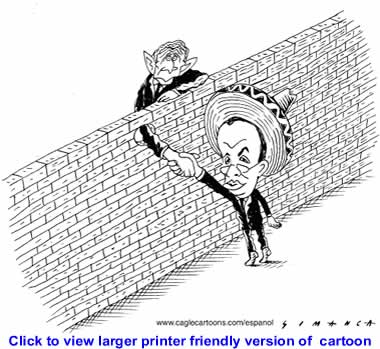
I sometimes wonder what the Guinness Book record is for the number of days that two next door neighbors refrain from speaking to each other.
I have no idea if that category exists but if it does, I might have a chance to make my first world record.
Judy and I bought our current house at the end of summer, 1994, a few months before Marlee was born. Now, it’s 2009 and still, my next door neighbor and I haven’t spoken. We haven’t looked at each other for more than a second, haven’t said one word on the phone, haven’t waved or nodded. The silence between us has been loud and clear.
Yeah, we’ve come close. When I nearly hit his car as he darted out of his driveway, I considered yelling. When his large body floated in his swimming pool as my daughters begged me to take them to the beach, I just about caved and asked if he would allow my young girls to please use his pool. When the police came in the early morning after being called by “the neighbors” who complained of our barking dogs, I almost walked next door and rang his doorbell.
It is just so much easier to stay away.
When I met another man for a business breakfast at a Livonia restaurant, it was no more than ten minutes when I perceived my next door neighbor and his two sons approaching me. I could peer them taking a seat at the table just three feet to my right, and felt finally, this was the day that the long and winding silence would be broken.
The man across from me kept talking at me, my eyes shifted right, I quickly shuffled some eggs and toast to my mouth and thought, I have got to say something to my neighbor. This ungodly, uncomfortable stillness had to stop.
But as the minutes slowly passed and nothing was said to me from the right side, I became a little more at ease. And when the check finally was plopped on our table, there was no turning back. The consecutive day count of silence between my neighbor and me was still intact.
I’ve always appreciated silence. I’ve had a difficult time communicating orally for most of my life. I used to think of myself as the shy, afraid-to-speak, keep-to-myself kind of guy. When news shows displayed footage of the latest psychopaths and their neighbors interviewed, how often was the crazy guy described as “nice but kind of a loner?” Except for their compulsion towards angry violence, the similarities between the desperate loners and me were often eerie.
Maybe it’s a guy thing. When a good friend and I sat in the family room at a high school graduation party, we discussed the importance of us not meeting anyone new, not saying hello to strangers, and making sure there was absolutely no eye contact. Rick said he believed it was critical for him to “limit his contacts.” We invented a verbal handbook for our “rules of disengagement.” We were perfectly happy to make no small talk with anyone (besides each other) and not blend into the party’s social network. We just wanted to construct social etiquette that would keep us away from the maddening crowd.
That’s the way I like it, with a network of a few friends whom I see every once in a while. I also like my office door shut; I like headphones on, the TV flickering from channel to channel. All I ask is for people not yelling, not fighting, no questionable or hurt feelings, and no one thinking, “why the hell did I say something so stupid?”
Keeping away from your neighbor isn’t so bad. Modern suburban neighborhoods aren’t what we grew up knowing. I lived in a 900 square foot house just a few feet between our two neighbor’s homes. We were comfortable to venture there, to talk and eat together, except for our crazy neighbor to the south who I thought of fondly as “The Nazi.” Mr. Combs sat on his front porch and gave kids the evil eye when they approached his finely manicured and thick, green lawn. His large boulder on the far right corner kept our car firmly planted on our thin driveway, inches away from his grass. But just like my neighbor and I, he never spoke a word to my father or mother, except once to tell them that the fence my father built was exactly one and a half inches over his property.
He spoke loudly and clearly for my dad to “take the fence down!”
I wished we had German Shepherds to mess up his lawn. We had a dog when I was four but we had to give it away after it plopped a big mound of excrement under our couch on the night of a crowded party in our 8 x 10 foot family room on Hugh Street.
You have to wonder why dogs are “Man’s Best Friend.” Is it because they’re friendly and obedient or because dogs are like men? They don’t talk, they’re always hungry, they eat way too fast, they like simple pleasures, and they like to bark at neighbors. If that’s not the typical guy, it’s typical me.
I’m not saying I’m proud of myself. I’d like to be a great speaker, comfortable in my own skin, happy to make small talk with someone new, as my wife does. When Judy places an order late at night with a catalog company’s customer service person, she shares her likes and dislikes, her work day, tells a little about the kids, and listens to all the minutia of the phone person’s life. She can talk for hours to anyone.
Me, I hate the silence shattered by a ringing phone, someone else ready to enter my space. I must be like my King Charles Cavalier Spaniels, Esther and Chauncey. I mark my territory and want no foreign invaders.
As Rick marveled at my neighbor and my accomplishments, having so many years of uninterrupted non-communication, he asked what I would do if we made it to 2014, achieving 20 years of blissful silence. I said, have a party, of course. Invite family and friends and send an invitation to my neighbors to the “20 Year Anniversary Celebration of Absolutely No Communication Between Us.”
My neighbor might actually take a chance and come over. Instead of congratulating him by making eye contact and talking, I would just shake his hand. The handshake between neighbors would be enough to let us both acknowledge: “Job Well Done.”
So far, in our nearly 15 years of living side by side on Stone Gate Court, I am proud to say that my neighbor and I have never argued, never run over the other’s grass, never let our dogs crap on the other’s lawn, and never resorted to angry violence.
Come to think of it, we’ve really been pretty good neighbors, like State Farm insurance representatives.
I wish that Palestinians and Israeli Jews could be so cordial.
 Aggman's Blog