
If we could read every text message, Twitter feed, or message on Facebook from our kids, we might be able to partially uncover the “secret life of the American teenager.” But would we know the real fears, uncertainties, and unpredictable emotions behind all the shorthand? I know my children and some of their friends are on my Facebook friends list, but I can’t translate much of their abbreviated language and scattered emotions behind their messages.
I do, however, know that Marlee, my 15-year old daughter, is very creative like her parents, writes and sings songs, plays acoustic guitar, is a good photographer, and likes acting, especially for films and TV. She enjoyed her acting class last year and wanted to try out for any available parts for teens. Even though Detroit is supposed to be the “next Hollywood,” the pickings after her 15th birthday in February seemed very slim for teens, except music video crowd shots or being an extra. Still, that didn’t stop Marlee and her mom from searching the Internet, and uncovering an independent movie in search of a promising high school actress. The writer-director, Mike Sneed (www.mikesneed.com) was a musician and song writer who had been writing scripts and music for independent films. The title for his new film, Butterfly Kisses, was promising and Marlee asked us to sign her up to audition for the role of Nikki.
We couldn’t foresee Michigan weather in February but Marlee really wanted to try out and we didn’t want to disappoint her. So my wife, Judy, and I gave ourselves lots of time to reach the Canton audition but snow mixed with freezing rain started falling and we had to get off I-275. I didn’t want an accident on the way to the audition, so we turned on the GPS, tried Haggerty and slid our way past signs covered with snow, while having a tense driving argument as my blood pressure rose. If we actually made it there, I thought, it better be worth the treacherous drive. But we finally reached the Canton Civic Center, a half hour late, and Mike, the director with long white hair, thanked us for coming and said that many of the other kids cancelled their auditions.
Mike warned us the movie was very personal and “heavy” and possibly too intense for parents but when Marlee read the try-out scenes, she really wanted the role and thought it was “perfect” for her. I hoped that meant she was drawn to sad and serious subjects just like her father and not that she was so similar to the lead character. Judy and I thought, however, we’d rather Marlee act the role than live it and hopefully, that would be it. The audition was about two hours long and Marlee felt she gave a strong, emotional reading and Mike admitted she brought tears to his eyes. On the way home, Marlee received on her Blackberry phone a “time capsule” written to herself five years earlier, telling future 15-year-old Marlee to hold on to her dreams. We could only think, was this meant to be?
Marlee was called back for a second audition in early March when I was out of town for a business meeting. Judy was afraid to drive back to Canton, worried about another helping of ice, and asked my father to join her. Maybe he could be the good luck charm who would help Marlee get the role. Again, Marlee seemed to perform well and became one of two finalists. But the month of March was a painful one for Marlee’s mom as Judy’s father, Max, went from Henry Ford Hospital to Danto Health Care Center to Beaumont Hospital to Fox Run and back to Henry Ford Hospital, becoming more ill by the week, while we waited for word from Mike about Marlee. He knew she was inexperienced but it seemed that he had a strong gut feeling that her intense passion was right for the role.
Marlee was absolutely thrilled when she found out that she got the part. Her parents, siblings, grandmothers, and grandfathers, Papa Milt and Zadeh Max, were excited as well. Zadeh Max was still conscious and happy when he heard the news, although he would never see the movie as he died during the last week of March.
The next few months of readings at Oakland University and filming, mostly at the sprawling Stonegate Farm (flanked by buildings filled with tractors and historical collections,) went fast. When we learned that the place we were filming had the same name as our home street, we again felt that this was “meant to be.” Judy and I drove Marlee wherever she needed to go, watched some scenes as they were filmed, had a cameo ourselves, enjoyed some laughs and food with the cast and crew over a few months, and waited anxiously for the final product.
A few months later, our family and a couple of Marlee’s friends, joined 30 others in a small darkened room in the middle of Southfield in September for a viewing, unsure what to expect. Mike Sneed, the musician, writer, and director, booked the room to show his newest movies, The Mesmer, influenced by a Edgar Allen Poe story, and Butterfly Kisses, a simple, touching story about a family heartbroken by miscommunication and the secret sadness that many children carry which parents often fail to notice.
I was nervous, not knowing what to expect from a movie shot on a real “shoestring” budget. No union members, no salaries, no marketing budget, everything shot in Michigan by Michigan actors, most working other jobs, hoping to make acting their full time careers. What was great was that these were people giving up their time and their creativity to realistically tell a good story as well as they could. It seemed to me that this was the true essence of filmmaking. Who needs computer imagery or fancy special effects or hundreds of crew members when you’re just trying to tell a thoughtful, heartfelt story about ordinary people?
Butterfly Kisses is, according to Mike, “a tragic story of a girl coming of age in a family and world that has lost the ability to communicate.” It features the relationship between a teenage girl and her parents and the disconnections between all three. The relationship between Nikki’s father and mother is scarred although the love between the mother/daughter and the father/daughter seem real and honest. The dialogue is simple, moving, and often tense, filled with regrets about this lost family, often lost to each other. The title comes from a scene in which Nikki and her dad reminisce about butterfly kisses they once shared before bedtime, contrasted with the underlying sadness of a teenage girl, now more like a broken butterfly. The haunting music written by Mike himself helps join the scenes together and sets the plaintive tone.
What struck me hardest was my uncomfortable similarity with Nikki’s father, Jake. I related strongly to him because I also have a hard time talking with my kids, often fumbling around for the right words or more often, staying silent. Like Nikki’s father, I often get caught up in television shows and have difficulty having a good, honest conversation, especially with my youngest. The raw strength of the movie is its power to bring out such an inconvenient truth.
It was often hard keeping my eyes dry, especially sitting next to my mother-in-law, only a few months after the loss of her husband, and my parents, unable to forget the loss of their son and my brother, Kenny, at age 13, even though it had been 28 years since the car accident. Watching a daughter and granddaughter in a tragic film is hard enough but amidst a backdrop of real loss, it’s even harder. When my father asked Mike what was the inspiration behind the film, Mike admitted that his brother died tragically, “probably suicide,” and his family was, like Nikki’s, dysfunctional and broken.
I may be prejudiced but I thought the performances by Robert Maples, Anne Klauke, and Marlee were first rate, believable, often understated, and emotionally powerful. It was obvious that Mike Sneed was pleased with the movie and very proud of all the actors. He could barely speak when he thanked all the actors and crew for giving up their time and efforts to help create his film.
When will others be able to see the movie? Probably not for awhile. Mike is sending it to film festivals and admits its length, 47 minutes, is too long for a short movie and too short for a feature film, so he may cut and submit again or lengthen and submit as a feature length movie. As is, the film may be used to help parents discuss dealing with their troubled teenagers, possibly shown in schools, or for social workers and psychologists working with troubled families. I think there is a future for Butterfly Kisses although I’m not exactly sure how it will evolve.
One of my favorite books was John Irving’s The World According to Garp, which I read before I had kids, but one I still remember for its intense atmosphere of loss and the heartbreaking frailness of families. “In increments both measurable and not,” John Irving wrote in Until I Find You, “our childhood is stolen from us — not always in one momentous event but often in a series of small robberies, which add up to the same loss.” We grow old too quickly, our children grow up too fast, and we forget too many of the small moments, which adds up to the same loss. Now, after sharing a 25th anniversary with Judy, our youngest child is now 15, soon to get her driver’s license, and acting in a movie.
Judy used to share butterfly kisses with Marlee when she was young and I remember sitting by Marlee’s bedside, helping her finally fall asleep when ominous fears kept her awake. Now, what I have besides memory is pride, seeing my daughter excel in a movie. I also remember the old popular song by Bob Carlisle and Randy Thomas with the same title as the movie and can hear the lyrics that haunt every parent:
Oh with all that I’ve done wrong, I must of done something right/ To deserve a hug every morning, and butterfly kisses at night…. She asks me what I’m thinking, and I said I’m not sure. I just feel like I’m losing my baby girl, and she leaned over… I know I gotta let her go, but I’ll always remember…Every hug in the morning, and butterfly kisses.


Where are the new American jobs? Ask Steve Jobs.
If you think “jobs, jobs, jobs” is Job Number 1 for President Obama, Treasury Secretary Geithner, and for all of the economic talking heads on TV, I’ve got an Apple iPhone4 for you, right here, ready for your pleasure, and made in America.
Just kidding. Foxconn, a subsidiary of Hon Hai Precision Industry Co Ltd, the company that actually manufactures Apple’s iPhone and many other popular tech gadgets, plans to hire 400,000 new workers, boosting its work force in China to over 1.2 million people, after its revenue shot up by 50 percent in the first half of 2010. This will give Foxconn nearly three times as many workers as three of its major U.S. customers: Apple with its 34,000 employees, Microsoft with its 89,000 workers, and Hewlett-Packard with its 300,000 employees.
You want to know where jobs are? Ask Steve Jobs, whose innovative and incredibly popular technological-breakthrough products are manufactured anywhere but in the United States. When announcing Apple’s third quarter, Jobs said, “It was a phenomenal quarter that exceeded our expectations all around, including the most successful product launch in Apple’s history with iPhone 4. IPad is off to a terrific start, more people are buying Macs than ever before, and we have amazing new products still to come this year.”
Apple sold 3.47 millions Macs, 3.27 million iPads, 8.4 million iPhones, and 9.41 million iPods, all in three months. $15.7 billion in sales and $3.25 billion in profits in one quarter makes Apple the world’s second largest company by market cap and Jobs one rich sonofabitch. So forgive Jobs, in his excitement, if he forgot to mention that the factory contracting to build his products just had its twelfth suicide this year on August 4th after a 22-year-old woman jumped from her factory dormitory in eastern Jiangsu province.
If you’re angry that the economy sucks in the U.S. and jobs are hard to find, there’s a lot of blame to go around. You can blame the unions who drove so much manufacturing to the south, to Mexico, and to China. You can blame government policies that allowed China to get equal status to the U.S. while keeping duties on Chinese products the same while undermining every industry Chinese companies competed with. It’s easy to be the low-cost provider when you have no legal costs, no human resources, little insurance, and you pay your workers $1 a month. Blame Wal Mart, blame the American consumer suckered into buying cheap Chinese crap and not worrying where it comes from. We Americans like our cheap fast food (doesn’t matter how many cows and chickens are inhumanely slaughtered,) our dollar stores, our illegal-immigrant supplied hotel staffs, and our newest hottest electronic whiz-bang goodies, especially if they don’t cost too much. We like our $200 portable computers the size of our hands that we can waste our time with, finding out instantly what our friends are doing in their bedrooms or hotels.
We can only hope that workers manufacturing our electronic toys start getting angry like they did in the U.S when they were abused and underpaid for decades in U.S. factories. Foxconn says they’re trying to deal with their angry workers. They have raised wages (to what, who knows?), hired counselors, and “installed safety nets on buildings to catch would-be jumpers” (“iPhone-maker rallies workers after China suicides,” Associated Press, August 18, 2010). They sponsored a rally in their mammoth industrial park in Shenzhen with its 300,000 factory workers, in which 20,000 workers dressed in costumes and held flags bearing messages such as “Treasure your life, love your family.”
Who do we have to blame for this? Is it a silent conspiracy between the stock market (whose talking heads praise Jobs and Buffet and Gates as their American idols) and the federal government which takes care of its unionized workers who can’t be outsourced and get automatic pay raises and health care and pensions for life? How about our useless political parties bankrolled by selfish lobbyists and hijacked by their extremist loyalists? Democrats are in bed with unions and want to raise taxes and regulate more companies. Republicans don’t care much about government and just want to lower taxes and kill regulations as they vouch for the phony “free market,” dominated by other countries we compete with.
Who cares anymore about Americans? Who cares for the rich, the middle class, and the poor; what about the needs of every American, not just a few? And should we be happy that we are borrowing more from the country that is growing its middle class as ours is shrinking? We got fat and lazy and self-satisfied while the far-east countries got hungry and took our jobs. “We’ve just ended more than a decade of debt-fueled growth,” writes Tom Friedman (“Really Unusually Uncertain,” The New York Times, August 18, 2010) “during which we borrowed money from China to give ourselves a tax cut and more entitlements but did nothing to curtail spending or make long-term investments in new growth engines. Now our government owes more than ever and has more future obligations than ever—like expanded Medicare prescription drug benefits, expanded health care, an expanded war in Afghanistan and expanded Social Security payments (because the baby boomers are about to retire)—and less real growth to pay for it all.”
As Tom realizes, even amidst his flat-earth optimism, “technology is destroying older, less skilled jobs that paid a decent wage at a faster pace than ever while spinning off more new skilled jobs that pay a decent wage but require more education than ever.” What he fails to mention is that they’re only so many CEOs and innovators and high-tech engineers to go around in the United States. What we need to get so many of our college graduates and those who can’t make it through college working, whether urban, suburban, or rural, is some more good old-fashioned American manufacturing for those hot new innovative American products.
Who is going to make the weapons and planes and surveillance systems if and when we are forced to go to war with China?
China?
Green Day, a made-in-America band, has an American rock-and-roll opera playing in Broadway, called “American Idiot,” which is about an “anti-hero, a powerless ‘everyman’ desensitized by a “steady diet of soda pop and Ritalin” It could also be about us Americans who got sold a bill of goods from Wall Street and Greenspan and Fannie Mae and Bush and Paulsen and Obama and Geithner about what economic success is and how to keep it.
We have to ask now, who has the guts to put smart people together to figure out how to get American inventions made at reasonable prices by American laborers without resorting to government hand-holding or forced-regulations or union-propping or the who-cares-where-anything-is-made-as-long-as-the-stock-goes-up mentality?
I guess I’m asking too much. I guess all we have to look forward to are the newest factories in China and other “third-world” countries, driving low-paid workers harder and harder, operating too-fast, pressure-cooker assembly lines, and requiring excessive overtime, so that they can charge less than everyone else in the world to manufacture the newest coolest things we want so that guys like Steve Jobs and Mark Hurd and Steve Ballmer and politicians with life-time benefits and Wall Street traders who make money, up or down, keep most of the remaining American dollars for themselves.
It’s the American way.
For the rest of us…the small company owners, those working the phones for very little, the outside salesmen, the airplane customer service employees fed up with their companies, those who work on the fast food counters, the retail warriors who work crazy hours, the unemployed, the graduates finding no work left, and those who have given up…
We can blog on the web for nothing…we the conned, we the loyal, we the patriotic, we the American idiots.

Boycotting Israel is certainly a better alternative than bombing. Yet, it is hypocritical for those who believe in liberty not to speak out against fanatic violence in the Islamic world while condemning Israel as a purveyor of “war crimes and ethnic cleansing.” Boycotts may not severely damage Israel but the message that boycotts send are blots against the only truly free democracy in the Middle East.
South African Nobel laureate Archbishop Desmond Tutu recently declared his support for the Olympia (Washington) Food Co-op's boycott of Israeli products. He also encouraged other cooperatives, grocers and businesses to boycott Israeli goods.
Tutu is not alone. If you Google “Boycotting Israel,” you will notice boycott websites, many maintained by the Palestine Solidarity Campaign, including JBIG, “Jews for Boycotting Israeli Goods.” In its sample letter urging people to stop buying Israeli goods and not visit Israel, here are some of its inflammatory arguments: “Israel operates an entrenched system of racial Apartheid against it own non-Jewish inhabitants and has been illegally occupying Palestinian land in the West Bank, Gaza Strip, East Jerusalem and the Golan Heights since 1967” and “The daily brutality of the Israeli army in Gaza and the West Bank continues; Palestinian land is being stolen, houses demolished and crops destroyed. For several months now the state of Israel has been carrying out a slow genocide in the Gaza Strip, maintaining a tight blockade over its inhabitants.”
The letter warns that if you buy Israeli goods or visit Israel, “you will be implicitly supporting war crimes, ethnic cleansing, dispossession, and continued oppression of the Palestinian people, a people seeking to end the silence of the international community and achieve a just peace.” (Boycott Divestment Sanctions, www.bigcampaign.org) If you believe this propaganda, you might turn against Israel the way British Prime Minister, David Cameron, did when he called Gaza a “prison camp.”
Not everyone is convinced of the poisonous words against Israel. Pilar Rahola, Spanish journalist, writer, former politician, and admitted “leftist,” asks her fellow Europeans, “Why is a tiny country which struggles to survive criminalized? Why does manipulated information triumph so easily?” The “present-day imbecility of anti-Israelism,” she argues, “is the new form of anti-Semitism,” (“Pilar Rahola Speaks: Jews with Six Arms,” www.aish.com).
“Why does a renewed intolerance surge with such virulence,” Rahola asks, “centered now, not against the Jewish people, but against the Jewish state?” She wonders why there aren’t demonstrations against Islamic dictatorships in such places as Yemen, Iran, and Sudan. Why aren’t there demonstrations against the enslavement of millions of women who live without legal protection or against the use of children as human bombs? And why, she questions, “Is there never any outrage against the acts of terrorism committed against Israel?” (“Confronting Europe’s War on the Jews,” Pilar Rahola, June 9, 2010, http://www.frontpagemag.com).
It is rare to find courageous non-Jews fighting for Israel’s rights in a world that highlights every controversy in Israel. It takes great courage to speak out about powerful Islamic fundamentalism which pervades much of the Muslim world. On her own continent, Pilar is one of the few questioning the predominant anti-Semitic, anti-Israel cultures in Spain and Europe. She writes that Israel has been “orphaned and forgotten” by the left and by “serious journalism,” belittled by the U.N. and rejected by even “tolerant” Islam. Rahola eloquently writes, “As a non-Jew, journalist, and lefty, I have a triple moral duty with Israel, because if Israel is destroyed, liberty, modernity, and culture will be destroyed too.”
Boycotting Israel is certainly a better alternative than bombing. Yet, it is hypocritical for those who believe in liberty not to speak out against fanatic violence in the Islamic world while condemning Israel as a purveyor of “war crimes and ethnic cleansing.” Boycotts may not severely damage Israel but the message that boycotts send are blots against the only truly free democracy in the Middle East.
I am left to wonder, why don’t more American Jews demonstrate some of Rahola’s eloquent passion in defending Israel’s existence? “As a person from the left who loves progress,” Rahola writes, “I am obligated to defend liberty, culture, civic education for children, coexistence and the laws that the Tablets of the Covenant made into universal principles.”
Desmond Tutu may use his honored status to stain Israel’s reputation but it is the courage of one woman fighting “Europe’s War on the Jews” who truly deserves praise. “The struggle of Israel,” Pilar Rahola concludes, “even if the world doesn’t want to accept it, is the struggle of the world.” Amen.

“I want long, straight, curly, fuzzy, snaggy, shaggy, ratty, matty
Oily, greasy, fleecy, shining, gleaming, streaming, flaxen, waxen
Knotted, polka dotted, twisted, beaded, braided
Powered, flowered and confettied
Bangled, tangled, spangled and spahettied”
Lyrics from Hair by James Rado and Gerome Ragni
In this modern age of mergers and consolidations, it’s heart-warming when two companies are able to both save themselves and grow their stock prices as well. Such is the tale of Delta and Northwest, two lousy airlines that merged, became new Delta, and started to make money. For its reward, Delta’s stock price doubled from last year at this time.
How did they do it? Just cut routes, put more seats in your old, crowded planes, cut flights, cut customer service reps, and give customers fewer choices. And like magic, Northwest turns to Delta…well hell, isn’t that the American (not the airlines) way?
I got a little taste of this merger when I left a business meeting a little early to make sure that Fred and I could make the 6:15 flight Friday night to Detroit. It was the hottest day of the year in Chicago and storms were approaching. We thought we could beat the thunder and lightning when we arrived, only to find that our flight and the only other flight that night were cancelled. Just a red word, CANCELLED, on the wall, and then waiting on the phone to get answers, and a long line at the Delta desk. We called Enterprise, Thrifty, and Budget, the only rental car companies that offered a one-way car rental, so we could get home at midnight, in time for Fred’s birthday and his plans with his sons to golf and see the movie, Inception. The cost from Thrifty was only $39 but the drop-off fee at Detroit was $1000 (yes, you read that right.) We were stuck in Chicago with the Memphis blues again (if you’re a Dylan fan, you’ll understand.)
So we were finally able to change our flight to the next morning, find a hotel, make a reservation on the Courtyard Marriott computer to get a better price, and slept little as we listened to thunder, lightning, and buckets of rain all night. We took a shuttle back to O’Hare, got there at 7am, carried our luggage, got Starbucks, and then were seated a half hour before the scheduled flight. We waited and waited and heard that they were working on a latch and after an hour, the pilot told us we had to take our luggage and “deplane” and that the rescheduled time became 2pm. To change flights or find out options, we had to stand in a long line to talk to four phones, hooked up to Delta “customer service” in Atlanta. Fred tried calling on his cell phone instead and was cut off seven times. I went on my laptop and accidentally changed our flight to the only other one available at 4:15. I got back in line to see if I could change it to the original changed flight, stood an hour in line behind crying children, a Chinese man who didn’t speak English and looked like his wife had perished, and so many others who had to get connecting flights and couldn’t find one real live human. The 11:30 flight had just been cancelled and finally, the Delta customer service agent on the phone whispered to me that our best chance was on the 4:15 flight because the other flight was now scheduled for 3pm and she said, “Who knows if that one will leave today?” Any options to switch to United or American? What about paying for our hotel? Nope. So we sat down and waited as the weather in Chicago and Detroit turned mild and I thanked my lucky stars when our previous flight was delayed till 5:30 and finally cancelled. Fred asked his son and I asked my wife to wait by their computers so we could call them if our flight was cancelled and they could quickly book the last plane on United, which still had seats and would cost $360 for the two of us.
As they say, beggars can’t be choosy. We were in the ultimate hairy situation, harried beyond belief, just two pawns in a sea of nobodies begging for airline relief and hoping that they wouldn’t have to sleep in the airport again. When we boarded the plane, I crossed my fingers, sat in the middle seat in the back row behind a young girl and her two-month old and prayed that we would get off the tarmac and make it home.
I had never witnessed a worse experience in airline service and realized that the reason Delta was now profitable was that it simply abandoned customer service altogether. Call it “customer punishment” highlighted by a simple “we don’t give a hoot” philosophy.
And as we finally took off, I thought that missing planes was not so bad amongst all the problems in the world, high unemployment, massive debt, political skirmishing from all sides, Detroit’s Chief of Police just fired, and two wars that were not going well, highlighted soon after by a massive new lead by WikiLeaks of 90,000 pages of classified material chronicling the bleak and heartbreaking truths about the war in Afghanistan from 2004 through 2009. I also thought of Larry Kern, someone I liked and admired, and one of the best people in our industry who had died suddenly a few days earlier at age 59.
I felt beaten down by Delta and death and worry and looked for anything to raise my spirits. I had read that Detroit’s auto sales were improving, especially Ford, the company with the best financials, hottest new vehicles: the one company that survived and thrived without government help. And then Time Magazine, in their Assignment Detroit, wrote about a new and pleasant kind of war that takes place annually in Detroit. No, not the drug wars and not the war between the City Council and the mayor. “This is Hair Wars,” Madison Gray wrote, “a 25-year-old Detroit tradition, this year featuring about 34 stylists and 300 models that has become one of the premier hairstylist events in the U.S.” (“Hair Wars,” Madison Gray, Time Magazine, August 2, 2010)
Okay, we’ve got Ford, a marijuana college, and some of the coolest hair styles in the world, ones that would make Lady Gaga get jealous. The magazine and Time.com featured some crazy and amazing hair styles, such as “The Hummer” styled by Little Willie, modeled b Sharv Bailey that took a full day to prep. I realized that some of these stylists and Detroit gals were like the new heroes and heroines of Detroit, displaying a real sense of bravado style.
We may have lost Saturn and Oldsmobile and Hummer and Pontiac and soon Mercury but we have hairstyles that get featured in Time and we have all sorts of Detroit emblems featured in the HBO (a Time Warner network) series, “Hung.”
Before I get too proud, I realize that the HBO show is about a school teacher who sidelines as a male prostitute to make ends meet and that most of the human hair used by Detroit stylists, according to Time, is “imported from Asia.”
Hell, I yelled to myself, even our coolest hair is imported! Shoes, iPhones, TVs, shirts, most of our cars, and now the hair.
Well, at least, we still have airports.
In honor of her memory, Nancy (Forster) Mantzikos and Sun Jen Yung chose to start a legacy for her fellow Columbia classmate by establishing the Dolores Arton (Class of 1988) Memorial Scholarship Fund (www.doloresartonscholarship.com) The endowed, need-based scholarship is given to a first or second-year MBA student at Columbia Business School who demonstrates, as Dolores had, a commitment to mentorship and leadership.
There were many heroes on the day of the worst attack in American history. You probably never heard about most of the unsung, courageous people who risked their lives to save others on September 11, 2001. And you probably never heard of Dolores Arton, an investment banker who worked at Citigroup in the World Trade Center’s Building #7.
Only 43 years old on the fateful day, Dolores showed extraordinary leadership, evacuating her first year trainees at Citigroup, not leaving until she felt certain that they had left. She took charge of what had turned into a panicked evacuation and led her co-workers down staircases to safety.
After Dolores witnessed the collapse of both towers, she spent many days accounting for every single trainee. She then reorganized the program and galvanized trainees to keep working at temporary facilities outside New York City despite their nightmarish memories.
This was not the first moment of sacrifice for Dolores. Over two decades earlier, she had attended college near her family home in order to care for her terminally ill mother and assist in raising her two youngest sisters. She financed her undergraduate studies at Temple University where she graduated magna cum laude with a BBA in Accounting. Then, she started her career as a CPA with Grant Thornton in Philadelphia, working very long hours and at 25, bought a fixer-upper-home in Philadelphia. Dolores was able to finance half her MBA degree at Columbia Business School after renovating and selling her house.
Although she was not a natural A student, her high energy level and love of challenges helped Dolores get a degree in 1988 and start her professional life at Paine Webber, where she met Sun Jen Yung, who had also graduated from Columbia Business School.
After Paine Webber, she went to Salomon Smith Barney and later to Citigroup, where Dolores rose to Chief of Staff to the COO of the Global Investment Banking Group, responsible for over 1,500 professionals in 25 offices worldwide. Dolores showed an innate ability to mentor analysts and associates, spending hours listening to their concerns, helping them discover their strengths and directions in life. She urged others to define themselves in ways true to their character, not simply to external measures of success.
In 2003, she joined Founders Equity, a New York-based private equity firm as Principal and CFO. And in November of 2008, Dolores reached out to a fellow Columbia graduate, Nancy Forster, who was considering reentering the paid workforce. Despite her long working hours at Founders, she was happy to offer Nancy her time and wealth of knowledge.
Devoted to the financial world, Dolores didn’t marry but loved animals, taking in stray animals throughout her life and being an active pet therapy volunteer. Not content just taking care of animals, Dolores chose to adopt a child herself. She began a long process to adopt an orphaned Russian girl but a few days before her trip to bring home Aziza, Dolores was struck by a massive cerebral aneurism at the train station, before leaving for work.
The next day, on February 6, 2009, Dolores Arton, only 51 years of age, was dead.
In honor of her memory, Nancy (Forster) Mantzikos and Sun Jen Yung decided to start a legacy for her fellow Columbia classmate by establishing the Dolores Arton (Class of 1988) Memorial Scholarship Fund (www.doloresartonscholarship.com).The endowed, need-based scholarship is given to a first or second-year MBA student from Columbia Business School who demonstrates, as Dolores had, a commitment to mentorship and leadership.
The fund already had $105,000 in commitments towards the $150,000 needed to endow a scholarship before the scholarship event held in June, 2010. Nancy and Sun invited Dolores’ family, friends, and former colleagues and classmates to attend the event, including Dolores’ sister, Beth, and the 12-year-old girl from Russia whom Dolores was planning to adopt. Beth and Tom had completed the adoption of Aziza from Russia in March and brought her home for good. And now, Aziza was planning to honor the woman whose dedication and love helped direct her to freedom and a family.
Legacies are about turning tragedy to love, horror to joy. A twin who helped her colleagues survive 9/11 and thrive despite of it…a loving sister who helped her family and friends find financial freedom…a woman who helped animals and chose to save a poor child alone in Russia…a loving person who chose to give her organs in case of sudden death. Because of the perfect match with Harry Paclawski in Pittsburgh, Dolores’ gift helped keep a person alive and healthy and brought him close to her sisters. And in honoring the memory of her sister, Beth continued the legacy of her sister by bringing a young girl from Russia to find love in a real family.
Last but certainly not least, a young woman’s memory is being honored by offering deserving young men and women a chance to get the kind of education that Dolores had received.
After Harry sent me the information about the fundraising event for the scholarship, I made a donation and emailed “Donor,” the article I wrote about the incredible links between Harry and his kidney donor, Dolores, to both Nancy and Sun. Sun responded, “Thank you so much for your thoughtful donation and truly moving article. Your telling of Dolores’ and Harry’s stories and how they are intertwined is very special. To me, it brings her last act as an organ donor full circle and we really appreciate your gesture to commemorate Dolores as we are through this scholarship.” And Nancy wrote, “There are no words to describe just how appreciative we are of your kindness and support of our efforts to establish a scholarship in Dolores’s memory. Your essay is a beautiful tribute to Dolores and I will be sure to share it with her family, as well as the news of your generosity. You are so right in calling her a hero who selflessly gave to others even upon her passing. We are all in awe of how much Dolores’s and Harry’s lives seemed to be intertwined.”
If you don’t believe that we have a chance to create our own miracles, then you don’t know Dolores or Nancy or Sun or anyone who chooses to honor the memory and legacy of someone cherished.
I feel honored because I never knew about Dolores Arton until Harry, immeasurably grateful, discovered Dolores’s history and met her loving family and then shared his story with me.
Since the event, the fund has raised an additional $12,000, gratitude has been paid forward, and the legacies will live on and on.
I must have woken up on the wrong side of the bed today. That’s what they say, isn’t it? I was happy to pick up two pizzas ordered for lunch instead of staying and working at an estate sale for which I had volunteered. My wife was helping her good friend raise as much money she could before she was to be evicted by the end of the month from her home before it was foreclosed. Her friend was also deeply sad that her son was feeling depressed and in pain and her father was extremely ill and fragile at her brother’s home.
I was happy to pick up the pizzas but when I left the parking lot, I backed up and finally stopped the car after I heard the warning signal of the car and the loud scraping of metal against metal. I had hardly scraped the back of our car but put a huge dent in the other car, a Toyota’s driver side door. I felt like a schmuck and went in to find out I damaged the car of a young pizza maker from Tomatos A’Pizza. We shared phone numbers and insurance info and then I got a call from the young man’s brother who actually owned the car.
Shaking and upset with myself and all the aggravation I caused, I planned to go back to the foreclosure sale but before I left, I looked at my Blackberry Tour, only to find a message from Diana, just two days after the birthday of her son, Noah, who would have turned 6 if he were still alive. She mentioned that she had a quiet birthday, did a little work, visited the cemetery, and was “fine” until she had a “meltdown later in the evening” when she was looking for a sketch of Noah that had been given to her that she hadn’t found. She decided to go to the storage unit which was “still full of items to be donated. In between Christmas and New Years, we organized everything, opened the rest of the cards, took down all of the Christmas decorations, donated most of what we had, donated Noah’s toys and clothes to various organizations, cleaned out my room, cleaned out Noah’s room, and organized the items that were sent to Noah. I haven’t been to the storage unit since then.
“When I opened the door, I had this strange feeling come over me. I almost felt like I was trespassing on something sacred – something special. Then I started to look through the boxes that are still there. The full enormity of what Noah had done and what Noah meant to so many people hit me like a rock in the face. Every ornament, every sticker, every stuffed animal, every Christmas card, every angel, every toy, every book, every crayon or marker, everything meant something. Everything meant something to someone. Noah symbolized something to every person who took time out of their life to pray, send cards, money, toys or whatever. If that’s not the most powerful thing to feel at once, then I don’t know what is.
Noah just wanted to play and be normal, Diana wrote, but he was “bigger than life—he was an angel on earth.” She had received a note from one of her staff members who wondered if Brandon Inge felt Noah’s presence on the baseball field and believed that he had. The staff worker “said that she knew how lucky she was to be a part of Noah’s life for the short time that she did.” But Diana felt that “I am the luckiest person here – I brought him into this life, I nurtured him, I fought through his illness with and for him, I helped him smile, I helped take his pain away, I got to love him like no one else did, and finally, I got to help him leave this life. How lucky were all of us to hear – and you know what? – hundreds of times a day? How lucky were we to watch him eat strawberries with sugar, sweet pickles, black olives, or mayonnaise sandwiches? How lucky were those of us that he wanted to go into my room and spend some time with them alone? Patty, my mom, Mary Beth, Colleen, Teresa, Sharon, Natalie, Chris, Bradley – just to name a few. It’s taken me some time to understand that he led the way – he was the leader of all of us. He was only five when he died, but he was much wiser. His innocence kept us going. His innocence over wanting to play with his Transformers and toys made it easier for us. Even though I know that he didn’t fully realize the power of his innocence, he made it easier. He just wanted to be close to me and play. He made all of us realize something much larger than ourselves. He changed us all. He made us better people for just having those five years with us. We are the lucky ones – he chose us….That, I believe, is the true power of Noah.”
On a day filled with the thoughts of a foreclosure, a son’s pain and depression, a father’s illness, and a car accident, I got a lesson about true luck and gratitude from a young woman who had just lived through her son’s sixth birthday without him. Yet, a woman still in mourning realized how lucky she and her family and friends were just to know her little boy for the five years he was here, alive. Is that not the most profound lesson we can learn?
We are so lucky to have the ones we love, every day they are alive, and even in memory on the days beyond their deaths. Whatever car accidents or financial calamities strike us should not stop us from celebrating the little mitzvahs that are ours, every day, whether we recognize them or not.
We are the lucky ones.

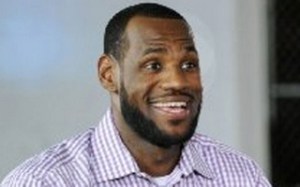
Still, Americans want real winners, winners who make millions, winners who are famous and always in the headlines, and Americans want athletes who earn championships for their fantasy-starved fans.
Who were the winners and losers following the LeBron James-what-city-is-he-going-to reality-tour-celebrity-sweepstakes on ESPN?
Winner No. 1: Tom Izzo, who finished his is-he-or-isn’t-he-coaching-in-Cleveland tour a few weeks ago, choosing his old MSU coaching job and staying in his home state, rather than gambling on the lucrative potential of coaching the Cleveland Cavaliers and possibly, its superstar, “King James” of Cleveland. Tom got to keep his glorious reputation while he probably sighed in relief that he didn’t become a sucker for owner Dan Gilbert’s generous offer to snatch him from East Lansing.
Winner No. 2: The Miami Heat’s ticket office which sold every possible season ticket the same night that LeBron decided to follow fellow high-priced-basketball superstars, Dwayne Wade (who kept his reputation as he stayed with the same team he’s been on for the last seven years and for which he won one NBA Championship), and pretty-good-NBA-forward-and-superstar-want-to-be, Chris Bosh, who already chose millions of dollars to play for Miami.
Winner No. 3: ESPN, which got to raise its advertising prices while simultaneously displaying the same crazy bravado that propels them to show two full days of NFL draft choices, thrilling its legions of fantasy-starved football fans who pray that one of their favorite team’s draft choices might become the next Barry Sanders.
Winner No. 4: Barry Sanders himself, who keeps looking better and better, choosing once upon a time to quit football quietly before he beat world records or got trophies or got seriously injured. He never made himself out to be a king of football but rather quietly did his job and moved into everyday life, still living in the same city he thrived in. I have more respect for Barry than LeBron and Tiger combined.
Still, Americans want real winners, winners who make millions, winners who are famous and always in the headlines, and Americans want athletes who earn championships for their fantasy-starved fans.
So Loser No. 1 is the poor old Cleveland fan who lost the superstar Superman, the same hero who was supposed to bring Cleveland its first championship in decades but failed miserably only a few months ago, choking after a 2-1 lead over the aging Boston Celtics. Loser No. 2 is Cleveland Cavalier owner and Detroiter Dan Gilbert, who wrote in a scathing letter to Cleveland fans, LeBron “quit…not just in Game 5, but in Games 2, 4, and 6. Watch the tape.” Ouch.
According to Gilbert, the “self-declared former king” had gotten a free pass which ended with a “narcissistic, self-promotional build-up culminating with a national TV special of his ‘decision’ unlike anything ever ‘witnessed’ in the history of sports and probably the history of entertainment.” He wrote directly to the fans, “You simply don’t deserve this kind of cowardly betrayal.”
If Gilbert had “stolen” Tom Izzo from East Lansing, would he have felt that MSU fans were justified to call Izzo “cowardly” and Gilbert, who has never lived in Cleveland, a thief? Hadn’t Gilbert bought the Cleveland Cavaliers because he couldn’t buy the Pistons even though his company was their largest advertiser? He thought buying the Cavs was a great investment because Cleveland had the best basketball player in the world and Gilbert probably assumed that the man who grew up in Akron would always call Cleveland his hometown.
Other losers: New York and Chicago, both teams thinking they had a shot to elevate their basketball teams to former glory. How about Mitch Albom, Detroit sports columnist, who was so disgusted with the whole LeBron shenanigans that “he wanted to throw up?” (“LeBron James’ circus ends; Miami’s now begins,” Mitch Albom, Detroit Free Press, July 8, 2010). Of course, although driven to stomach illness, he was right that the whole media circus was ludicrous. “The number of supposedly respectable people tripping over themselves to hand him $100 million should make all of them and many of us ashamed….In a country where people are out of work or out in the streets, LeBron’s basketball home was never important. But spilling money on his head is downright insulting.”
The endgame for LeBron and Gilbert and anyone else in sports is to “win it all.” That goal drove Detroit Piston President Joe Dumars to draft Darko Milicic after winning the 2nd Draft Pick seven years ago on June 26th, 2003, right after Cleveland chose LeBron. Dumars could have chosen Dwayne Wade or Chris Bosh but Darko was taller with “more upside.” Winning it all drove Dumars to make his second worst choice ever when he traded his point guard, great-basketball-player-and-good-guy Chauncey Billups, who had already led the Pistons to a championship, for Alan Iverson, considered even a truer Hall-of-Fame-type superstar, hoping that Alan would be so driven to finally win a championship that he would lead the Pistons to glory again. What a fiasco that was.
Will the signing of LeBron, I wonder, lead Miami to the same terrible state that the Pistons have dropped into since banishing Chauncey to his hometown in Denver? Like Cleveland, the Detroit Pistons were close to winning it all every year. Dumars gambled on Iverson and now, LeBron gambled on Wade and Bosh in Miami.
Is this how American divides up winners and losers? The winners are those who win championships or those who earn fortunes while keeping their reputations relatively unscathed, i.e. Gates, Buffet, Oprah, Seinfeld, Lady Gaga (whoops…once she flipped her middle finger to New York baseball fans, even Seinfeld flipped out in disgust.)
LeBron just wanted to be really respected the old-fashioned American way, by being bought for millions and showing that yes, with the right superstars beside him, even he could eventually win an NBA Championship. “For me,” LeBron said to ESPN, “it’s not about sharing, it’s about everybody having their own spotlight and then doing what’s best for the team.” Get the spotlight, don’t share, and then do what’s best for the team. Good luck, LeBron. Everyone will be gunning for you, Cleveland hates you, and if you don’t win a championship, it’s your fault. Have a nice life.
But who can blame him? That’s what we want for our superstars, to make billions and win at any cost. Screw the little guy. Isn’t self-determination just living for yourself?
We’ve got it backwards. We little guys and girls who work hard, don’t make a big fuss, help our families, and help our communities…we are the champions, my friends. If we don’t buy an NBA ticket or don’t watch an NBA game or don’t buy anything from an NBA sponsor or and don’t pay any more attention to these over-priced, rip-off phony athlete-entertainers, we can then maybe find real contentment.
And that’s the essence of being a winner, once and for all.

And I just can’t keep living this way
So starting today, I’m breaking out of this cage
I’m standing up, Imma face my demons
I’m manning up, Imma hold my ground
I’ve had enough, now I’m so fed up
Time to put my life back together right now
From “Not Afraid,” lyrics by Eminem
An upbeat article in Time Magazine reports on “what may be one of the few growth industries, in Michigan, home of the nation’s highest unemployment rate: 14%” (“Higher Learning,” Steven Gray, Time Magazine, June 28, 2010). What is Michigan’s exciting growth industry? Medical marijuana. And you can learn everything you ever wanted to know at Michigan’s Med Grow Cannabis College in Southfield.
No, that’s not a typo and this is not a 2010 version of the old movie, Reefer Madness. According to Gray, medical marijuana at almost $500 an ounce can allow entrepreneurs the chance to provide “it to a mere five patients” and “generate $10,000 a month in sales.” Wow! It’s just what we need in this state to get excited, lucrative drug profits not going to drug dealers (I mean, “illegal” drug dealers.)
And the prospects are even more exciting in California, if their voters agree on a measure on the November ballot to legalize marijuana for “recreational” use and allow it to be taxed. Tom Ammiano, a Democrat from San Francisco, estimates that those new taxes “could generate up to $2 billion in annual revenue for California.” Hey, how much more can we keep taxing all those poor nicotine addicts and hopeless alcoholics and addicted gamblers? The cities and states have to raise huge amounts of money to pay for their massive debts now, accumulated for years collecting once-lucrative housing property taxes and estate taxes and the hundreds of other taxes to pay for all of their early retirees’ ultra-generous pension plans and A+ health care plans.
In the same issue of Time, David Von Drehle writes “Governments that were lavish in the good times, building their budgets on optimism and best-case scenarios, now risk being wrecked like a shantytown in an earthquake” (The Broken States of America: The Other Financial Crisis,” David Von Drehle, Time Magazine, June 28, 2010). 14 states are expected to have less than 1% reserves, “living hand to mouth.” Federal government stimulus dollars (all borrowed, piling up the United States debt to perilous levels) have mostly been spent, most dollars already given to states to keep them from imploding.
And how did the states get so bad, with at least $1 trillion short of their promises to retirees, according to the Pew Center? Well, the New York Times reported that some 3,700 retired New York State public employees earn more than $100,000 a year in pension payments. A California fire chief from the Bay Area, according to Time, at age 51, was “collecting more than $241,000 a year in retirement pay.” In San Diego, the once-prosperous city now on the verge of bankruptcy, a grand jury found “a recurring practice of skipping required payments to the city’s pension fund while simultaneously awarding ever more generous pensions to public employees.” And what does California’s public-employee unions want to do about it? They are “lobbying for a bill to ban government bankruptcies entirely.”
How do you keep the states and cities and country from falling into deeper and deeper debt? Well, you borrow more “stimulus” dollars from China and other countries that have some cash on hand. You raise taxes on the people and corporations left who can afford to pay. And you find new avenues to fund the plight of addicted spending.
You may ask, why not legalize other forms of drugs, to go along with all the chemicals leaching into our bodies from chemical companies and all the billions of dollars of prescription drugs fed to us from our drug pushers, i.e. doctors? Why not allow the free market to supply all of the cocaine, heroin, and methamphetamines, putting profits into the ordinary citizens’ hands and giving governments a huge chunk of new taxes?
Legalizing all drugs might help end the flood of Mexican meth warriors moving north across our porous borders. La Familia Michoacana, “a bizarre gang of Christian-fundamentalist narcotraffickers” (“Mexico’s Meth Warriors,” Tim Padgett and Ioan Grillo/Apatzingan, Time Magazine, June 28, 2010), led by Mexican Narario Moreno—a.k.a. El Mas Loco (The Craziest One) is one of the fastest-rising drug cartels, specializing in the production and trafficking of methamphetamine. The Craziest One and his drug “family” produce half of the $20 billion of meth flowing into U.S. streets. La Familia has written its own bible and holds prayer meetings before decapitating the heads of their enemies as they infiltrate the Mexican government, making the American mafia seem quaint and old-fashioned.
In TV and movies, making and selling meth seems to be the quickest way to wealth. Who needs the stock market, working day jobs, or education? In TV’s best drama, Breaking Bad, Walter White is a simple school teacher who turns to making meth to help him finance his medical costs after his bout with lung cancer. In its 3rd season, White and his partner, former student, Jesse Pinkman, have descended into a hellish storm of betrayals, violent cartel murders, tragic losses, and heart-pounding, near-death experiences, and yet they can’t seem to give up the thrill of making millions by feeding the horrific habits of young American addicts. Even in the highly-praised movie, Winter’s Bone, 17-year-old Ree Dolly has to deal with her vanished father, locally renowned for his skill at cooking methamphetamine as well as the violent drug dealers he was involved with.
What’s with all this media preoccupation with drug addiction? You can’t help wondering what would happen if illegal drugs were made legal to reduce the billions in drug trafficking profits and the horrific violence that results. Wonder why these drugs are illegal while all the legal addictions keep feeding our economy? Cigarettes, alcohol, and gambling are joined by the addictions of over-eating huge amounts of fast foods, sugary, salt-loaded and fat-filled food in restaurants and homes that feed eating addictions, contributing to massive amounts of obesity, diabetes, cancer, and heart disease.
Think about it: the American economy has been growing for years, fed by the flow of addictions to bigger and bigger houses and TVs, paid for with the addictive accumulation and usage of credit cards. We still get addicted to our latest electronic gadgets, Kindles, iPods, iPhones, WIs, iPads, Droids, and addictions to instant electronic satisfaction on the Internet. Our new 20-year-old part-timer in the warehouse of IDN-Hardware Sales just showed me his new iPhone 4, which he picked up at Wal Mart after standing there from 5:30 a.m., desperate to replace his iPhone which he only bought two months ago. Like an electronic addict, he had to get the “sweet” device which allows him to spend hours scanning the Internet and playing games. Meanwhile, millions are addicted to shopping of all kinds, from clothes to jewelry to other disposable products. And municipal governments, cities, counties, and the entire U.S. Federal Government are so coked-up on borrowing and debt that they can’t relinquish their astronomical spending habits.
“The situation today is vastly worse than a couple of years ago,” Nassim Taleb told CNBC. Author of The Black Swan, a book that deals with the impact of highly improbable events like housing bubbles bursting and investment banks falling apart, Taleb is deeply pessimistic about our debt levels. “Today,” he said, “we have more risk in the system and a lower tax base.” When asked how to deal with a country that has the highest liabilities in the world, he replies, “Don’t give a junkie more drugs; don’t give a debt junkie more debt.”
All of this is enough to make the average person feel like jumping off a roof or stopping at Coldstone Creamery or buying a six-pack. I can’t help but think about Breaking Bad’s Jesse Pinkman at the end of the second season, which I addictively watched (all 12 episodes) after succumbing to the last episode of Season 3. After Jesse’s girl friend vomited to death after getting high on heroin, Jesse fell into a psychologically drug-ridden, comatose state, not wanting to wake up again.
Eventually, Jesse returned to life, just like Michigan’s rapper-songwriter Eminem, after being close to death from drug addiction. When all seems hopeless, we can learn something from Eminem on his latest CD, Recovery, which grapples with his years of drug addictions and the realization that “You’re slowly dying. You’re crying out for help.” In the song, “Not Afraid,” he shared how he was able to rise again after a triumphant 12-step breakthrough.
Even if the United States addiction to dept increases to almost $14 trillion this year and close to $20 trillion by 2015, making our future far more treacherous than Greece, we can take a little heart from the plight of Eminem. We can wake up one day and realize that selling or using drugs, buying iPhones, constantly using credit cards, and feeding our addictions are all virtually empty and meaningless.
It’s scary to think how much of our economy is built on the addictions of millions of Americans. And addictions are not going to get any better by legalizing them. Think how much schools depend on the gambling addictions to lotteries and casinos. Think what would happen to the tax base if the usage of cigarettes and alcohol was cut in half. And then think what the government might do to raise taxes and fees on all of the new “legal marijuana” endeavors.
Don’t give junkies more of what they crave. Don’t give alcoholics an open bar. And don’t give government debt junkies more debt.
We must not be afraid to honestly realize the nature of our addictions before finally conquering them. “I’m not afraid to take a stand,” Eminem raps in “Not Afraid” from his CD, Recovery. “Everybody come take my hand / We’ll walk this road together, through the storm /Whatever weather, cold or warm /Just let you know that, you’re not alone /Holla if you feel that you’ve been down the same road.”
 Aggman's Blog