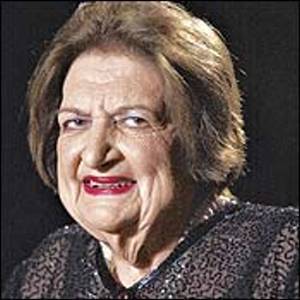
I wonder how many people around the world silently thought Helen Thomas had it right when she said that Jews in Israel should just “get the hell out of Palestine” and “go home…Poland, Germany, America, and everywhere else.”
The tumult over Israel continued with Helene Cooper’s article (“What to Do About Israel?” June 6, 2010, New York Times) which addressed how Netanyahu’s policies may be hurting America and continued in the same newspaper when Jewish fiction author Michael Chabon wrote, “Now, with the memory of the Mavi Marmara fresh in our minds, is the time to confront, at long last, the eternal truth of our stupidity as a people, which I will stack, blunder for blunder, against that of any other nation now or at any time living on this planet of folly, in this world of Chelm.” (“Chosen But Not Special,” Michael Chabon, June 6, 2010, New York Times)
Isn’t it special when a chosen Jew writes in the world’s leading newspaper that Jews and the nation of Israel are no better than Nazi Germany or North Korea now or Russia murdering thousands of civilians in Chechnya or Darfur and Rwanda government-sponsored-genocide or Hamas and its charter calling for the murder of Jews (article 7) and the destruction of Israel (Article 15)?
It’s the same peace-loving-liberal-can’t-we-all-get-along mantra spouted by The Nation’s editor/publisher Katrina vanden Heuvel who announced on HBO’s Real Time with Bill Maher that “Israel has lost her soul.” For most other countries’ brutality and murders kept far away from the press’s prying eyes, it’s innocent before proven guilty. For Israel, the world and its press use a different standard: Israel is guilty in the eyes of the world before anyone knows what happened. Why should Israel need to defend itself against its possible enemies? Isn’t hope enough that what is coming through to Hamas-led Gaza is just food and medicine? We shouldn’t think about thousands of rockets that were launched at Israel over the last five years.
How much was publicized that a Turkish Islamist group with a history of assisting Islamist terrorists played a major part in the “humanitarian sailing” of the Mavi Marmara flotilla? Why don’t we hear that Israel transfers 15,000 tons of supplies and humanitarian aide every week to the people of Gaza? It’s not part of the world’s sanctioned story that Jews are the powerful occupier of historic land which also belongs to millions of poor Palestinians who just want their land back and are content living side by side with Israel’s Jews.
If Helen Thomas, the White House Press Corps Bureau chief for United Press International who has covered every President since the last years of the Eisenhower administration and been a front-row participant for presidential press conferences, believes Jews should get the hell out of Palestine because it’s not their home, what do you think much of the world believes?
In her New York Times article, Helene Cooper addressed Israel’s public relations troubles putting pressure on the U.S. She wrote that General Petraeus said a lack of progress toward peace in the Mideast has created a hostile environment for America. In an interview, Petraeus said, “If you don’t achieve progress in a just and lasting Mideast peace, the extremists are given a stick to beat us with.”
The question becomes: do the extremists need more sticks to beat us with? Of course, the United States would rather have Israel quiet, peaceful, not drumming up any controversy, stirring up negative world opinion. But Israel’s enemies already have plenty of sticks ready to unleash against Israel, with worldwide acceptance or not. If you listened to an interview on PJTV with Retired Major General Paul E Vallely, now the Miltary Committee Chairman for the Center for Security Policy in Washington, D.C. you already realize that sticks are the least of Israel’s problem. He says that Iran is already “Nuclear” and preparing a preemptive bombing attack upon Israel with Hezbollah. He says that the Iranian government through the Syrians have stockpiled up to 60,000 rockets in Lebanon and that Hezbollah has received long range Iranian SCUD missiles that can hit every city in Israel, capable of delivering massive amounts of chemical weapons. He also says there at least 4 tunnels built along the Northern Israeli-Lebanon territory to invade Israel.
Even if you aren’t paranoid or fearful for Israel, you have to admit that Israel is under attack, at least in the world’s court of opinion. And it is certainly not being helped by the silent response from the U.S. administration after the flotilla incidents or after Helen Thomas’ tirade.
Even if President Obama’s administration and the rest of the country are focused on the disastrous oil spill in the Gulf and the resulting environmental and economic calamities, we must be prepared for more devastation in the Mideast. Soon, the cries from Israel’s terrorist enemies may become “Kill, baby, kill” and Jews will once again be the targets.
If the United States doesn’t stand up soon for its one democratic ally in the Middle East, the imminent disaster there may make the oil spill in the Gulf seem like a minor leak.

As I thought about the brochure while watching a movie about the beginning of Israel, I understood the reality that Israel, like The Little Traitor, is filled with life and resilience, and yet the world gives it little respect.
I had never heard of the movie, The Little Traitor, when my wife asked if I wanted to join her and two friends at the Maple Theatre. I didn’t learn much other than it was an Israel/USA co-produced movie based on the novel “Panther in the Basement” by the world renowned author, Amos Oz, and took place in 1947 Palestine, just a few months before Israel became a state.
The Little Traitor is no Avatar or Iron Man 2…no violence or special CGI effects, and little box office receipts. Instead, it’s a simple, funny, entertaining, and touching movie about a young boy, son of Holocaust survivors, in British-occupied Palestine who simply longs for the British soldiers to leave so Israel can become its own state.
62 years later, Israel may be the only country in the world still fighting to maintain its statehood. Israel is no longer occupied by foreign troops but is still haunted by the condemnation of much of the world.
Relentless critical attacks on Israel are hard to withstand. How do we counter overwhelming critiques from all sides? The UN Goldstone Report lashes out at Israel Defense Forces; countries compare Israel to an Apartheid state deserving boycotts and sanctions. Even our own American government condemns new apartments in an established, heavily populated Jewish neighborhood in Northern Jerusalem, where 250,000 Jews live.
How do we stop the frenzy of angry threats that back Israel’s supporters into a corner? As Rabbi Marvin Hier, the Founder of the Simon Wiesenthal Center, writes, “It’s time for all of us who care about the state of Israel to join together and fight back!”
When I received his 2010 TOP TEN ANTI-ISRAEL LIES brochure in the mail the day before I watched The Little Traitor, it revealed clearly that one of Israel’s biggest hurdles is convincingly explaining why so much of the world’s view is wrong. Wiesenthal’s fold-out pamphlet simply and effectively addresses distortions aimed at Israel and answers them with facts clearly stated. The map on its cover shows the little sliver that is Israel, dwarfed by massive countries such as Egypt, Syria, Iran, and Saudi Arabia. It confronts lies like “Israel was created by European guilt over the Nazi Holocaust,” that Israel withdrawing to its 1967 borders would have created peace, that “Israel is the main stumbling block to achieving a Two-state solution,” and that nuclear Israel is the greatest threat to peace and stability.
The brochure shows that Israeli policies are NOT the cause of worldwide anti-Semitism, illuminates Jewish history and Israel’s real past and present, addressing Arafat, Hamas, the Oslo Accords, Palestinian President Abbas, Goldstone, and Iran’s quest for nuclear weapons. This excellent brochure is available to print from the Wiesenthal website (www.wiesenthal.com/toptenlies) or can be ordered on the phone at 800-900-9036. It is an excellent and invaluable resource necessary to defend Israel’s right to exist.
“It is up to us,” the brochure states on its last page, “to help disseminate the facts about Israel—to our Nation’s leaders, to world governments, to our media outlets, to all who will listen” (all listed on the pamphlet.)
As I thought about the brochure while watching a movie about the beginning of Israel, I understood the reality that Israel, like The Little Traitor, is filled with life and resilience, and yet the world gives it little respect.
Filmed in the streets of Jerusalem, the movie about Israel’s independence almost wasn’t finished. The American producers of the film were afraid of violence and, coincidently, the 2006 war between Israel and Lebanon broke out on the 3rd day of shooting. Yet, as the war continued, so did the shooting of The Little Traitor. And when Alfred Molina, who played the British soldier, spoke the lines, “Eventually there will be trouble between the Arabs and the Jews; It’s in the Bible, the Prophets predict it,” the building they filmed in started to shake as five military jets were flying overhead on their way to Lebanon.
As writer/director, Lynn Roth, wrote, “We were filming a movie about Israel’s right to exist as she fought for her continued existence. The movie, the reality, the characters, the history, the news jumbled together. We saw the war through the perspective of our movie, and made the movie through the perspective of the war around us.”
Facing war and death is not new for Israel and litters the history of the Jewish people. Yet, even in the midst of terror and fear and death, we pray to God, give thanks for our lives, and we keep praying every single day for peace. As Jewish mourners throughout the world pray for their lost loved ones in the Mourner’s Kaddish, they recite, “May there be abundant peace from Heaven, and life, upon us and upon all Israel; and let us say, Amen.”
I hope that Jews everywhere refuse to be belittled and keep standing behind Israel. Who else will fight and pray for this little country surrounded by enemies? Who else but us?
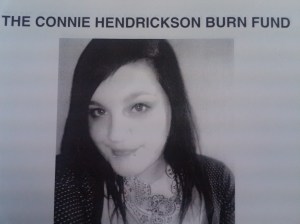
As a father of two young girls and a boy, my heart breaks from this sudden tragic incident that will forever change the life of a father and his daughter. And I will do whatever I can to help.
What would you do if your son or daughter was burned badly in a fire? What would you do if she had no health insurance and was dependent completely on Medicare?
Would you weep or pray? Would you search for answers and try to raise money to cover all the expenses that threaten to destroy you?
These are not theoretical issues. On March 5, 2010, a 19-year-old girl was badly burned in a house fire when a candle fell over and started to burn. By the time the night was done, Connie received burns over 40% of her body, mainly on her chest, back, legs, and feet. When the fire trucks came, she wasn’t breathing and had to be resuscitated.
Ten weeks later, Connie is at Detroit Receiving ICU Burn Unit and will probably be there for a long time to come. She doesn’t have health insurance and Medicare only covers some of her costs. Yet, she needs extensive physical therapy and medical care which will require large, unforeseen medical expenses.
Her father, a single dad, has been employed by our company for over two years and has full custody of his daughter. And he is responsible now for her expenses and is also needed to be by her side.
He and his family have set up the Connie Hendrickson Burn Fund to help her rebuild her life. Donations can be sent to the “Connie Hendrickson Burn Fund” at LOC Federal Credit Union, 22981 Farmington Road, Farmington, MI 48336-3915, or you can call them at 248-474-2200. Cards or notes can be sent to her father, Dennis Bierschbach, 23057 Haynes, Farmington Hills, MI 48336, and he will be sure to give them to her.
As Dennis’ employer, our company will be donating. But money is just not enough.
As a father of two young girls and a boy, my heart breaks from this sudden tragic incident that will forever change the life of a father and his daughter. And I will do whatever I can to help.
I ask everyone who can pitch in to do so.
Connie is going to have her 20th birthday in June.
Let’s make it just a little bit happier for her.

We should never forget mothers who keep going to preserve the memory of their children, to help their own as well as others persevere from sickness hopefully into good health. Their gratefulness for the lives of their children and determination, as Miles Levin once wrote, to “keep struggling and keep fighting,” are inspirations to many of us, often too consumed with our daily lives to notice.
April 27, 2010 was the first official day of the Power of Noah Foundation, named after Noah Biorkman, who died last November at the age of 5 from a childhood cancer, neuroblastoma. As a way to remember Noah and to help other children from suffering from this horrific type of cancer, Noah’s Neuroblastoma Research Fund was started at the University of Michigan’s C.S. Mott Children’s Hospital.
Because of the 1,175,000 Christmas cards that were sent to Noah last November and the donations that many included in their cards, Noah’s mother, Diana, gave a check for $75,000 to begin the foundation. After the dedication ceremony at the hospital, “Noah Day” was celebrated at Leo’s Coney Island and more money was raised to go to the research fund.
UofM has a rule with endowment funds that states that a fund must reach $100,000 before the doctors can begin to use the money for research. To help raise another $25,000 to get the fund helping to find cures for neuroblastoma, Diana sent out a CALL TO ACTION to her friends, family, and Carepages readers. She wrote, “With your help, Noah received 1.175 million Christmas cards in 25 days! Now, let’s see how much money we can raise in 25 days! Attached is the link for the online donation site for UofM or you can money or checks made payable to either the Power of Noah Foundation or Noah’s Neuroblastoma Research Fund, sent to 1141 Fountain View Circle, South Lyon, MI 48178, or go to http://www.giving.umich.edu/give/mott-noah.”
You might wonder what gives a mother the power to keep going after losing her only child after 2 ½ years of fighting cancer with chemo and courage. But as Diana wrote on March 22nd, “A couple of weeks ago, I cried for two and a half days. Yes, you read it right. I did. Then, I was back to my normal self. I’m not quite sure what caused the meltdown, but I’m glad it’s over. For me, crying is annoying and just causes my nose to run, head to be stuffed up, and puffy eyes. I would much rather do something productive with my time than sit around and boohoo. I’m not saying that boohooing isn’t necessary or a good way to relieve stress for other people. Just not me.
“So, here I am,” she wrote, “boohooing for days, missing Noah, feeling sorry for myself, and all that. Then Zach and Bethany both pass away from this horrible cancer—neuroblastoma. Instantly, I was reminded of the lessons that Noah had taught me. Got off my sorry butt and do something. So, I called my staff and we got our butts in gear. We have been working on things for awhile now, just not with any urgency. That has now changed.”
Noah’s favorite phrase was “and you know what?” and so the Power of Noah Foundation’s website is fittingly named www.andyouknowwhat.org which is the link to raise money for the Neuroblastoma Fund. The heading reads, “The power of Noah lives in all of us…Pass it on…”
Even though Diana went back to work at Pella Window and Door and has been busy fundraising for Noah’s fund, she has not forgotten other children suffering from other forms of cancer. She sent out a message to her readers to visit www.teamkendal.com and see Kendal’s story. So for us mothers and fathers with healthy children, we learn once again what too many parents face, the scourge of cancer in their children. Here is Kendal’s story told by her mother on her website:
“12 years ago almost to this very day, Kendal was diagnosed with Acute Lymphocytic Leukemia (ALL). After 26 months of treatment she was able to enjoy the next 10 years cancer free, focusing on all the major priorities in life ( you know friends, texting, facebook, boys, what to wear!) Now at age 16 our beautiful Kendal is facing a new fight. What once appeared to be a relapse has turned out to be a new diagnosis of Acute Myelogenous Leukemia (AML). This battle will be a little tougher than before. Kendal will first have to be put in a state of remission, which is a more difficult process with AML, then she will require a bone marrow transplant. We are very fortunate that her brother is an almost perfect match. We thank God for this blessing and Jake is very excited to be able to give his sister the greatest gift of all! From our friends and family we ask for your continued prayers. Kendal would also like to encourage you to donate blood to your local red cross and become a member of the bone marrow registry. It is through these marrow matches that children are able to beat this cancer….Kendal is a BEAUTIFUL, STRONG and AMAZING girl whose determination is greater than anything I've seen. Not long after receiving this very devastating news Kendal was posting this message on her Facebook, ‘I do not know why I have been dealt these cards but I am capable of anything and I will beat this.’ This we know is true and we BELIEVE….Kendal, we love you more than words can say and we BELIEVE! Love, Mom and Dad”
On this week before Mother’s Day, I have more gratitude than ever for mothers, like my wife, Judy, who has nurtured Kyle, Ilana, and Marlee to grow up healthy and confident while letting them know she’s there for them whenever they need her, all this while faithfully saying Kaddish every day for her father. I am so thankful for my mother-in-law, Carole, and my mother, Rochelle, knowing how much they devoted and still devote to their children and grandchildren, and for my sister, Leslie, as she raises Karenna.
We should never forget mothers who keep going to preserve the memory of their children, to help their own as well as others persevere from sickness hopefully into health. Their gratefulness for the lives of their children and determination, as Miles Levin once wrote, to “keep struggling and keep fighting,” are inspirations to many of us, often too consumed with our daily lives to notice.
Each and every Mother’s Day for Noah and Kendal’s moms are times to be thankful for what they had and still have. Each and every day, they fight to preserve memory and meaning and grapple with their children’s bouts with cancer. That Noah is no longer here does not stop Diana from helping others, including Kendal, the teenager whose determination to beat cancer keeps her parents believing in the miracles of faith.
Like Diana and Kendal with her parents, we just need to believe.

Why remember? The storm clouds are gathering all over the world for Jews. Iran is preparing for nuclear weapons for Israel’s extinction, Hamas and Hezbollah are strengthening, synagogues are being vandalized, and even the U.S. leaders want Israel to negotiate, no matter the consequences, for “peace” with those who still call for the destruction of Israel.
I rarely faced anti-Semitism or thought much about the Holocaust while I grew up in Livonia in the 60s. As I sat on the bus going to Hebrew School, I didn’t ask why rocks were thrown at our windows or wonder why my Hebrew teacher, Rabbi Charles Rosenzveig, seemed so distant. Nor did I ask about the histories of my Uncle Morey or his friends, Aron and Frances Zoldan, all Holocaust survivors living two blocks away, on St. Francis Street.
Rabbi Rosenzveig, founder of the Holocaust Memorial Center in Oakland County, made sure in the next two decades that Jews like me didn’t take the Holocaust for granted. I grew puzzled, then saddened, and later horrified how men could commit such evil. In 1984, I took my future wife, Judy, to the Holocaust Center the same day I asked her to marry me. To truly experience joy, I reasoned, we must also understand depths of sorrow and despair.
Over 25 years later, my wife and I sat at Adat Shalom Synagogue, as she and her mother read Kaddish for her father, who died the morning before the first Passover Seder. The day before Yom HaShoah, Rabbi Bergman, the son of Holocaust survivors, admitted he understands the Holocaust less than ever, more stunned now by such unexplainably brutal cruelty. Yet, he also acknowledged believing that all 6 million Jews who perished in the Holocaust resisted in their own ways, either physically, mentally, or spiritually.
On the following day, on Sunday, April 11th, Jews around the world gathered in their own synagogues and communities to remember Yom HaShoah and mourn those we’ve lost. After the Sunday minyan service at Adat Shalom, we listened to my old Livonia neighbor, Aron Zoldan, a faithful man who comes daily to minyan service, talk about the Holocaust. Unlike so many survivors, Aron likes to talk about his past, in English or in Hebrew. He spoke about the three week trip on a cattle car from Mukacheve to Auschwitz with his parents and five siblings; how everyone stood, bunched tightly together, with virtually no food, for the entire three weeks. When they arrived, he and two brothers were chosen to work at Auschwitz while the other three siblings and both his parents were chosen to die.
Aron admitted he survived once by hiding in the crematorium’s chimney for two days. He spoke of the 60-mile forced march from Mauthausen to the Gunzkirchen camp, that prisoners were liberated by the U.S. 71st Infantry Division, and that one of his brothers could not survive the march, dying on May 5, 1945. We heard Aron’s anger at FDR for turning away ships of Jews, how he had been taken to Cyprus and eventually landed in Palestine and fought in Israel’s war of liberation.
After Aron’s incredible stories, we listened to Chazzan Gross and the Adat Shalom choir sing from his original oratorio, entitled, I Believe: A Shoah Requiem. Gross’ grandmother, Masha, was the only member of her immediate family to survive the Holocaust, unlike her parents, eight brothers and sister, and other relatives who were “slaughtered in Belzec.” The chazzan, acknowledging there is no significant portion of liturgy dedicated to the Holocaust memorial, “wanted to create a lasting link to commemorate this day of remembrance.” He and the choir sang two excerpts from I Believe, L’Zikhrom K’Doshim (Yizkor Memorial Prayer for Martyrs) and El Malei Rachamim. This includes the tragic English words, which were beautifully sung in Hebrew: “Men, women, and children who were murdered, burned, drowned, and strangled, for the sanctification of the Name, through the hands of the German oppressors may their name and memory be obliterated. Because without intending a vow, I will give tsedakah for the remembrance of their souls, May their resting place be in the Garden of Eden.”
Why remember? The storm clouds are gathering all over the world for Jews. Iran is preparing for nuclear weapons for Israel’s extinction, Hamas and Hezbollah are strengthening, synagogues are being vandalized, and even the U.S. leaders want Israel to negotiate, no matter the consequences, for “peace” with those who still call for the destruction of Israel.
So amidst this frightening scenario, Judy and I stood, a small part of a group of Jews on Yom HaShoah, walking silently into the sanctuary toward the special Torah saved from the Holocaust. We were led by 6 Holocaust survivors who lit 6 candles for the 6 million who perished. We all read the Holocaust Kaddish and sang two songs, ending with Hatikvah: “Our hope is not yet lost, The hope of two thousand years, To be a freed people in our land, The land of Zion and Jerusalem.”
Why remember? Because it’s a mitzvah to remember, because we can’t allow the repetition of cruel destruction. Why? Because thousands of Holocaust survivors such as my Uncle Morey and Frances Zoldan are no longer with us. And in the coming years, survivors like Aron Zoldan will be gone, their voices faded away.
We cannot allow the memories of 6 million souls to perish with them.
Who knows the meaning of loss and connections, why a young woman suddenly dies and a man is suddenly made healthy?
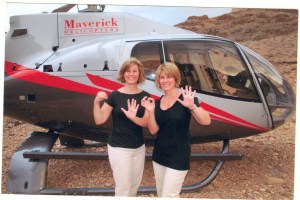
In this photo taken outside a Maverick helicopter, two twins, Dolores and Katherine, celebrated their 50th birthday. After they landed, following a helicopter tour over the Grand Canyon, they both gestured with their hands to the photographer, signaling the number 50.
Eight months later, Dolores, the lady on the left, was set to take her daily train from Greenwich, Connecticut to Wall Street where she worked. Dolores, who had been in perfect health, waited for her morning train and suddenly, before the train arrived, felt a horrible headache, which turned out to be a brain aneurysm. A brain aneurysm is a weak bulging spot on the wall of a brain artery very much like a thin balloon or weak spot on an inner tube which forms silently from wear and tear on the arteries. 6 million people yearly in the United States have unruptured brain aneurysms and around 25,000 of those rupture. And 40% of people who have ruptured brain aneurysms die as a result.
On the morning of February 5th, Dolores didn’t know she had a brain aneurysm. The next day at 5:30 p.m., Dolores was pronounced dead.
An hour later, Harry, the inside salesperson at our Pittsburgh branch, was called. He was told he could receive a new, healthy kidney if he acted quickly and could come to the hospital within a few hours. He had been on dialysis for many months after his kidneys had failed, first on hemodialsis and then, months later, peritoneal dialysis. Before peritoneal dialysis, he had been unable to work for a long time and was extremely nauseous and lethargic. While on dialysis, he was put on a kidney transplant list, hoping to eventually find a kidney match. About 15,000 kidney transplants per year are done in the United States. Harry was hoping to be one of those.
Our company had just changed health insurance plans in Pittsburgh in January, 2009, from Highmark Blue Cross to Aetna. All the paperwork had been submitted detailing the possible kidney transplant and the letter of authorization that Aetna would cover it arrived a few days before the call about the sudden donor match. Within twenty-four hours after getting the phone call, Harry had successful kidney transplant surgery. They placed the good kidney on his right front side near the pelvic area and didn’t remove his two diseased kidneys. His creatinine level during the first month stabilized and over the next six months, continued to improve. He went back to work part time at first and later, full time.
A few months later, Dolores’ family sent Harry a three page detailed letter with pictures about his kidney donor. Dolores had never been married but was in the later-stage process of adopting a little girl from Russia. She was due to officially adopt the girl on February 9th but died three days earlier.
Dolores, who was very educated and a world traveler, was one of five sisters including Katherine, her twin, as well as Mary, Beth, and Trisha. The sisters kept in touch with Harry for the last seven months and have grown very close to him, “almost like lost relatives,” according to him. He says he is so grateful for Dolores and her family and writes, “I feel communicating may give them a little comfort, knowing that their sister’s gift is doing somebody good…We all feel very close; they refer to me as the brother they never had.” The sisters’ father, who is deceased, was also named Harry and they “agree that it’s nice to have another Harry in the family.”
Harry is married to Sandy and the father of two twin adopted boys, Andy and Tom. Tom is also the name of two of the sons of Dolores’ sisters. And the little girl from Russia who Dolores was planning to adopt? Her sister, Beth, over a year later, adopted this same little girl whose name is Aziza. Sister Trisha wrote to Harry, “Actually you're timing is perfect as always (just like Dolores' was!) I am right now in NJ watching Beth's kids and she and her husband Tom are flying back from Russia this evening with Aziza. Kathy was there last week with them (they've been there 2 times in the past month!) and we are all going to Newark airport tonight to meet them! We will take pictures of Aziza's entrance to the U.S./her new family and will send you these as well as photos of Russia that Kathy has taken — she's an amazing photographer.”
Harry told me that last year, he decided on a whim to go to Ocean City, New Jersey for a family vacation and stay at the Port-O-Call Hotel and started having cravings for French fries with Hellman’s Mayonaise, instead of his usual catsup. When he found out in a random discussion with Dolores’ sisters that French fries with Hellman’s Mayonaise was Dolores’ favorite snack and that her family went to Ocean City’s Port-O-Call every year, he was stunned. He wonders about cellular memory, if the genes of Dolores are somehow calling to him. I wonder if Dolores and her father are making sure that the sisters have a new brother and that Harry, who has two brothers, now has sisters. Both families have become incredibly close.
Who knows the meaning of loss and connections, why a young woman suddenly dies and a man is suddenly made healthy? I think back to when I found out my best friend from sixth grade, Lewis Stone, died suddenly at night from a ruptured brain aneurysm. I instinctively felt then and still feel now that my life somehow was changed that day.
Who knows why people die so suddenly? Was Dolores’ father, Harry, involved from the afterlife in any of the life-and-death connections of his daughter? Have they made sure Aziza was adopted, even after Dolores’ death? Or was it all just coincidence, fate, or luck? One can only hope that Dolores is still a world traveler in the afterlife and that she has played a role in finding Harry for her sisters and helping her sister, Beth, adopt Aziza.
Who knows? I stare at the photo of a young woman, so happy with her twin sister, on her 50th birthday, and wonder what was hidden in the back of her mind. She never could have imagined that eight months later, her life would be suddenly taken from her.
She could have never known then that within a year, she would end her life a hero, saving more than she would ever know.
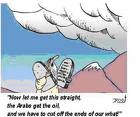
Jewish Country Hits
* I Was One Of The Chosen People "Till She Chose Somebody Else
* I'm Crying In The Manischevitz
* Four Thousand Years Of Sufferin' And I Had To Go And Marry You
* Eighteen Wheels And A Dozen Latkes
* You Picked A Fine Time To Leave Me Schlemiel
* Mommas Don't Let Your Babies Grow Up To Be Cowboys When They Could Have Easily Taken Over The Family Business That My Very Own Grandfather Broke His Neck To Start And My Own Father Sweated And Toiled Over For Years Which Apparently Doesn't Mean Anything To You Now That Your Turning Your Back On Such A Gift You Ungrateful Schmuck
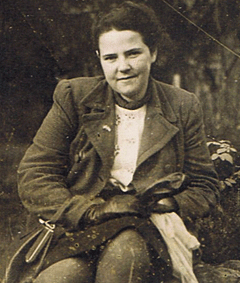
In a world that is still filled with too much hatred and genocide, we need to treasure the few survivors left from the Holocaust. As I quietly roamed the Zekelman Family Campus and witnessed the still photos of so many haunted men, women, and children staring at me, soon to be brutally murdered, I couldn’t help but imagine two young lovers in the same setting.
January 27, 2010 marked the anniversary of the liberation of Auschwitz-Birkenau, the largest Nazi death camp. The UN General Assembly in 2005 designated this day International Holocaust Remembrance Day (IHRD) to honor the victims of the Holocaust and to develop educational programs to help prevent future acts of genocide.
That night, a unique photo album exhibit came to the Holocaust Memorial Center in Farmington Hills, helping to commemorate the liberation of the death camp. The Auschwitz Album: The Story of a Transport displayed astonishing photos taken in 1944 of Hungarian Jews from Carpatho Ruthenia on their arrival at Auschwitz. Eighteen-year-old Lili Jacob accidentally found these photos in abandoned German barracks after she was sent to the Nazi slave labor camp, Dora, which was liberated by Americans. The photo album included heart-breaking images of her family and friends before they were killed in Auschwitz’s gas chambers.
Four days later, Nicholas D. Kristof reported in the New York Times about a civil war in eastern Congo which, he wrote, “is the most lethal conflict since World War II and has claimed at least 30 times as many lives as the Haiti earthquake” (“Orphaned, Raped and Ignored,” January 31, 2010). He wrote how millions in Africa have been slaughtered by Hutu militia, only to face a “pathetic international response.” It was just like the 1994 Rwandan genocide, repeated again and once again hidden from the rest of the world.
While I could hardly believe or stomach the devastating brutality on the other side of the world, I began to realize the hidden meaning of the Auschwitz Album, photos that were unseen for years, which will be displayed at the Holocaust Memorial Center through April 18th. I thought if we could only see those types of photos sent to us from journalists or other witnesses via email, Facebook, the world might be jarred enough to stop the thousands of rapes and murders happening in the Congo right now.
It’s hard not to feel despair after viewing faces of children right before they had their last moments of life and thinking that senseless genocide is happening again. But how can we give up now? And why should we stop searching for something uplifting?
Sometimes, sparks of hope come from nowhere. One of those gifts showed up in an email from the United States Holocaust Memorial Museum, featuring an article about a young boy and girl who fell in love in the most horrifying of settings and miraculously found each other 65 years later (“A 65-Year Search Ends in a Tearful Reunion,” www.ushmm.org, February 1, 2010).
After a young girl’s parents were deported from Poland’s Tarnow ghetto, 15-year-old Renate Abend was left completely alone. But in a soup line, she met 19-year-old Kalmek Mahler, whose job was to keep order in the soup kitchen, and he made sure Renate’s bowl was filled first. Later, after she got a finger infection and then an amputation, Mahler found a hiding place for her so that Renate wouldn’t be shot or transported. He hid her in the ceiling of an abandoned shop and then he brought her food and a latrine bucket.
After Renate was deported to the Plaszow forced labour camp and thought she would never find Kalmek again, she stood in the middle of the Plaszow labor camp and glimpsed her young friend through the barbed wire, “like God had sent an angel to look after me,” (“Love and hope in hell,” Adele Horin, Sydney Morning Herald, Dec. 12, 2009).
Kalmek smuggled a pillow, blanket, and food for Renate. And when they were both transported to the Pionki labour camp in the middle of a bitter winter, he found leather to put on the souls of her shoes to ease her trek through snow to the ammunition factory where she worked. Mahler was even able to smuggle with the help of his friends a present of an angora jumper, boots and a skirt for Renate.
Renate and Kalmek promised each other that they would marry if they survived but in early 1945, they were both sent on separate death marches. Renate survived a final death march to Bergen-Belsen before the allied liberation and was evacuated to Sweden and then settled in Belgium where she was married, assuming Kalmek Mahler was dead. After her first husband died, she moved to Australia and re-married, had children and grandchildren and lived happily for 35 years until her husband’s death.
A few months ago, Renate Grossman’s daughter Helen and granddaughter Michelle, looking for information about her grandmother for a high school project, traveled from Australia to the Holocaust Memorial Museum in Washington DC. With the help of a Registry specialist combing extensive historical records, they found Renate’s first love, Kalmek Mahler, on a list of survivors. He had changed his name to Carl and was now living in Canada. The museum contacted Carl who was thrilled to learn that his first love had survived.
Renate, who cannot fly because of her “bad legs,” learned from her son how to use a computer and use Skype so she could communicate with Carl. She laughed, “Of course I had in mind a 19-year-old…tall, good looking and full of go, and when I saw him on the computer, well, he was an old bald man.” But, she recalled, “he started to cry and I started to cry…he said I was still beautiful as ever.” And now, most importantly, Renate says, she is “very happy to have found him when he is alive to be able to thank him for saving my life.”
In a world that is still filled with too much hatred and genocide, we need to treasure the few survivors left from the Holocaust. As I quietly roamed the Zekelman Family Campus and witnessed the still photos of so many haunted men, women, and children staring at me, soon to be brutally murdered, I couldn’t help but imagine two young lovers in the same setting.
Those two children of the Holocaust somehow survived and found each other 65 years later. I couldn’t help but feel a twinge of hope and thankfulness, imagining two lonely survivors, now speaking across two sides of the world on an Internet connection, their faith restored in the possibility of miracles.
 Aggman's Blog